


Roofers in Burgess Hill,the Town That Made the Tiles.
Burgess Hill grew from a rural settlement into a town between 1850 and 1880, on the back of the railway and its brick and tile works. Clay tile is in its blood, and most of what we do in RH15 is keeping tiled roofs of every age doing their job.
Roofing and Guttering in Burgess Hill, on the West Sussex Line.
The London and Brighton line opened through here in 1841, and for years the station was a request stop. Then the town arrived. Between 1850 and 1880 Burgess Hill went from an insignificant rural settlement to a town, and almost all the Victorian detached houses and workmen's terraced cottages of that period have survived. Brick and tile making was already old here; the Keymer Brick and Tile Company made bricks by hand until very recently.
The twentieth century added the rest in layers: Noel Rise in the 1950s, the Folders Lane, Oak Hall Park and Sheddingdean estates in the 1970s and 1980s, West End Meadows in the 1980s, Hammonds Ridge in the early 1990s, and now new homes on the old Keymer Tileworks site, off Folders Lane and in the Northern Arc to the north of the town.
Burgess Hill sits in the Sussex Weald on the edge of the South Downs National Park, with Bedelands Farm nature reserve to the north-west and Hassocks, Hurstpierpoint, Keymer, Ditchling and Wivelsfield around it. We cover RH15 on the West Sussex line, 01444 702 095.
The Roofs of Burgess Hill, From the Tile Works Onwards.
The Victorian Town
Detached houses and workmen's cottages from the second half of the nineteenth century, roofed in local clay tile and slate, with the stacks and valleys of their age.
The Post-War Estates
Noel Rise and the housing of the 1950s and 1960s: concrete tile on underlay and fixings that are now sixty or seventy years old, with long gutter runs at the eaves.
Folders Lane, Oak Hall Park, Sheddingdean and Hammonds Ridge
The estates of the 1970s to 1990s: interlocking tile, flat-roofed garages and extensions, and fascia and gutter work as the original plastics age.
The New Streets
The former Keymer Tileworks site, the Folders Lane developments and the Northern Arc: young roofs where any fault is at a detail rather than in the covering.
What We Get Called to in Burgess Hill.
Re-Roofing
Victorian and post-war roofs stripped to the rafters and rebuilt in tile with new underlay, battens and fixings, when a repair has stopped being worth it.
New Roofs explained02Downpipes
Blocked, cracked and detached downpipes replaced, and the shoe at the bottom set so the water goes away from the wall.
Downpipes explained03Pitched Roofing
Tiled roofs repaired and re-laid, hips and ridges re-bedded, verges made good.
Pitched Roofing explained04Gutter Repairs
Leaking joints and sagging runs on the long eaves of the estates, put right with the fascia checked behind them.
Gutter Repairs explainedClay Tile, Clay Ground and a Town of Estates.
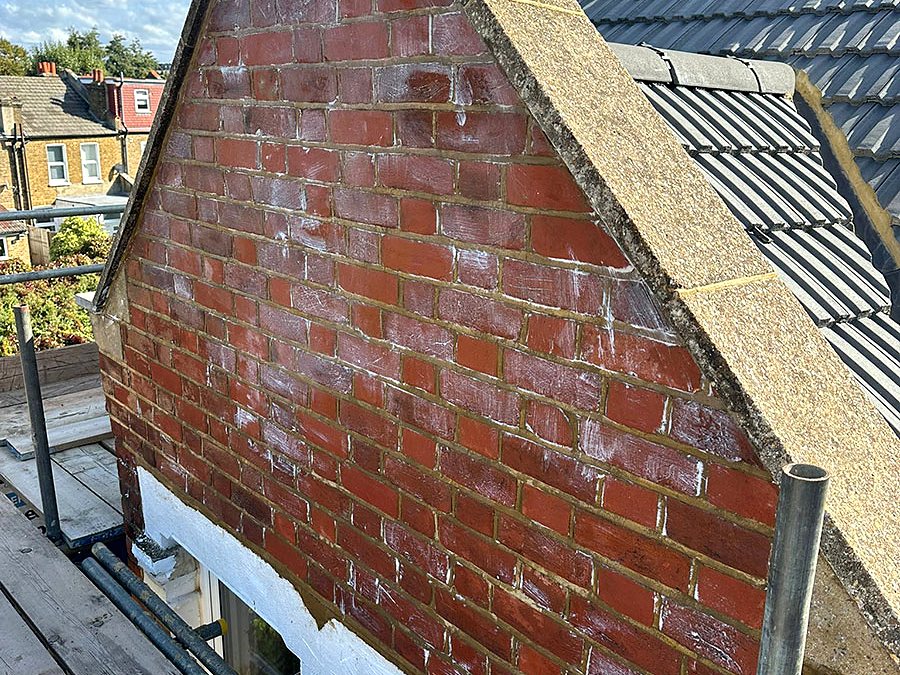
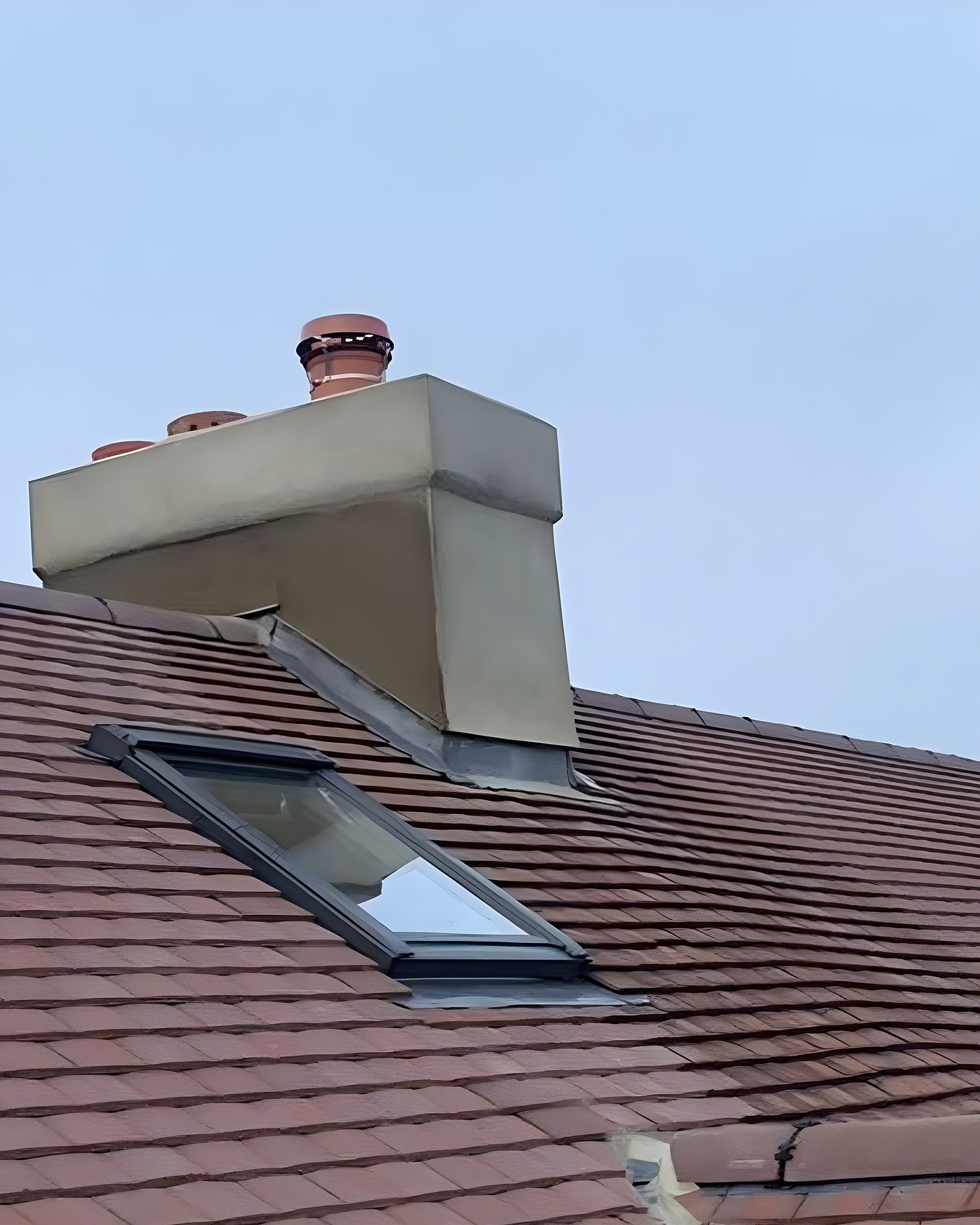
Burgess Hill made tiles for a reason: the Weald is clay. The same clay moves under the houses with the seasons, and on the Victorian streets that shows first at the chimney stacks and the gables, where the pointing opens and the lead flashing lifts. We look at the flaunching, the pointing and the lead together whenever we are up on one of these roofs.
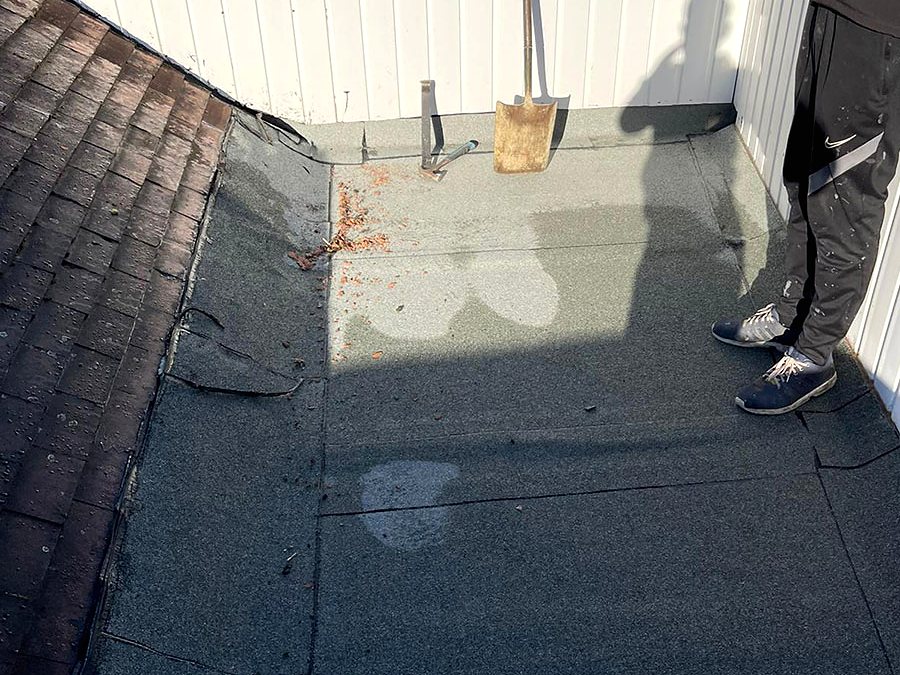
The estates each have their own age and their own faults. The 1950s and 1960s roofs have underlay that has gone brittle behind sound tiles. The 1970s to 1990s estates have plastic fascias and gutters reaching the end of their life and flat roofs on the garages that were never meant to last this long. We lift tiles, look and tell you what is actually there.
Mid Sussex District Council is the planning authority for the town, with the eastern edge in Lewes district. Most roof work needs nothing from either. Where a house is listed or in a conservation area we check what applies before pricing.
The fault we are called to most in Burgess Hill, lit on the house.
Where We Work in and Around Burgess Hill.
RH15 and the villages around it, from the West Sussex line.
Burgess Hill Town Centre
RH15The Victorian heart of the town, around the station and Church Road.
St John's and World's End
RH15The northern and north-eastern sides of the town, around the old common.
Sheddingdean, Leylands and Dunstall
RH15The estates to the north and west.
Folders Lane, Oak Hall Park and Hammonds Ridge
RH15The estates of the 1970s to 1990s on the eastern and southern sides.
The Northern Arc
RH15The new homes being built to the north of the town.
Keymer and Hassocks
BN6The old parish to the south and the village beyond it, on the Brighton line.
Hurstpierpoint and Ditchling
BN6The villages to the south-west and south-east, under the Downs.
Wivelsfield
RH17The village to the north-east, with its own station since 1886.
Why Two Jobs in Burgess Hill Cost Different Things.
We give a written price for the work we have looked at. In Burgess Hill these are the things that move it.
Matching the Clay Tile
A repair on a Victorian house matches the profile and colour of the tiles already there, and a re-roof stays in clay. That costs more than a basic concrete tile and it is what the town's houses deserve.
Fascias and Gutters on the Estates
On the 1970s to 1990s estates the plastic fascias and brackets are at the end of their life. Replacing the fascia and the gutter together is cheaper than doing them separately.
What Is Under the Tiles
On the 1950s and 1960s roofs the underlay goes before the tiles. Whether that is a repair or a re-roof depends on how far it has gone, and we look before we say.
The Questions We Get Asked in Burgess Hill.
The town and all of its estates, and the villages around it: Keymer, Hassocks, Hurstpierpoint, Ditchling and Wivelsfield. Ring the West Sussex line on 01444 702 095, which is a local 01444 number.
Yes. We match the profile and the colour of what is there so a repair blends in, and on a re-roof we use a clay tile in keeping with the town rather than a basic concrete one.
The original plastic fascias and brackets are at the end of their life. Re-hanging the gutter on a tired board just repeats the fault, so we replace the fascia with new uPVC and hang the run on sound fixings.
Probably the underlay. On a 1950s or 1960s roof it goes brittle and tears long before the tiles fail, and wind-blown rain gets through. We lift a few tiles to check and tell you whether it is a repair or a re-roof.
Yes. New roofs rarely fail in the covering; when they leak it is a detail such as a flashing or a valley, and it is quick to find from the roof.
No. We come out, look at the roof and give you a written price with no obligation.
The Other Towns on the West Sussex Line.
Burgess Hill and the villages under the Downs are covered from the West Sussex line on 01444 702 095. A visit and a written price cost nothing, and there is no obligation.
Tell Us About the Roof in Burgess Hill, and We'll Come and Look.
Your name, a number, the street and what you have noticed. That is all we need.