


Roofers in Crawley,Neighbourhood by Neighbourhood.
Crawley was designated a new town on 9 January 1947, and most of it was built in the decades that followed: neighbourhood by neighbourhood, from West Green in 1949 to Forge Wood in 2014. Each one has roofs of its own age, and we know which is which.
Roofing and Guttering in Crawley, on the West Sussex Line.
The new town was planned as a ring of neighbourhoods around the old market town, and they went up in order: West Green from 1949, Northgate in 1951, Three Bridges and Langley Green in 1952, Ifield and Pound Hill in 1953, Southgate and Tilgate in 1955, Gossops Green in 1956, Furnace Green in 1960, Broadfield in 1969, Bewbush in 1975, Maidenbower privately from 1987 and Forge Wood from 2014.
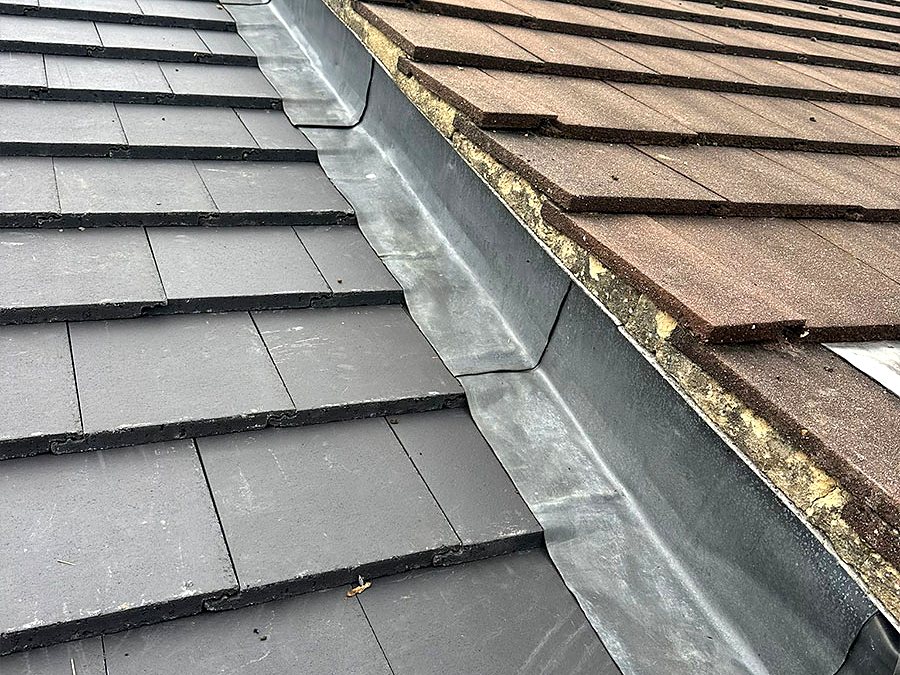
The 1950s neighbourhoods were built around three-bedroom family homes, with terraced, semi-detached and detached houses, low-rise flats and bungalows. Their roofs are concrete interlocking tile, for the most part, laid on underlay and battens that are now seventy years old. The tiles can look sound while everything under them has reached the end.
Crawley sits in the Low Weald on the edge of the High Weald, with Tilgate Forest to the south and Gatwick to the north. We cover RH10 and RH11 on the West Sussex line, 01444 702 095.
The Roofs of Crawley, Decade by Decade.
The 1950s Neighbourhoods
West Green, Northgate, Three Bridges, Langley Green, Ifield, Pound Hill, Southgate, Tilgate and Gossops Green: concrete tile on seventy-year-old underlay, battens and nails. The commonest re-roof we do in Sussex.
The 1960s and 1970s Neighbourhoods
Furnace Green, Broadfield and Bewbush: later concrete tile, more flat roofs on garages and extensions, and long gutter runs on the terraces and the blocks.
Maidenbower and Forge Wood
Built privately from 1987 and from 2014: young roofs where the faults are at the details, a flashing or a valley laid short, rather than the covering.
The Old Town and Ifield Village
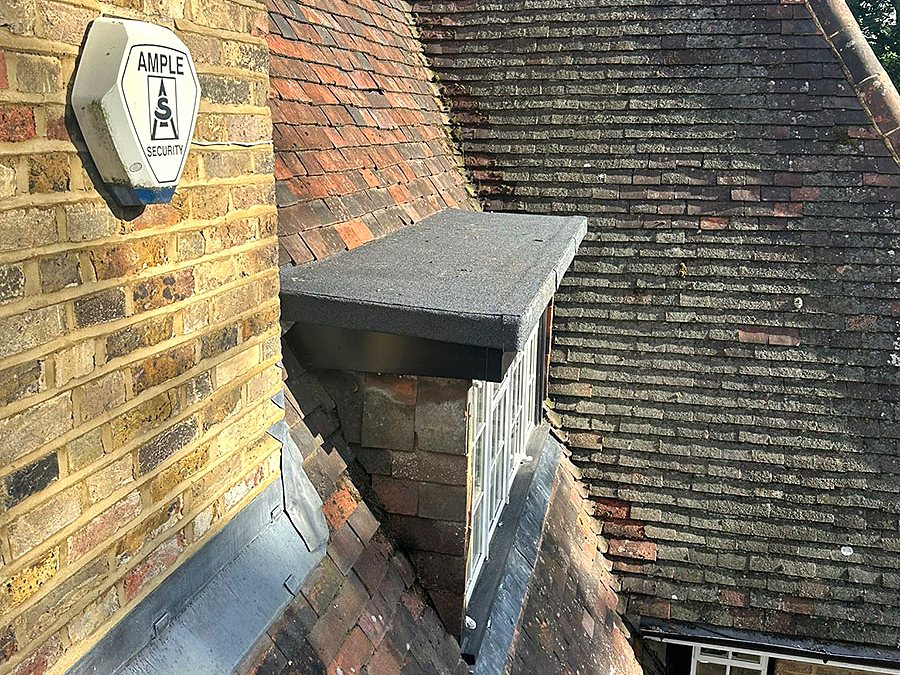
The High Street and the village that the new town absorbed: older houses in clay tile and slate, with stacks and lead that need looking at properly.
What We Get Called to in Crawley.
Roof Cleaning
Moss lifted off the concrete tile that the 1950s neighbourhoods are covered in, and the gutters it fills cleared afterwards.
Roof Cleaning explained02Gutter Replacement
New uPVC runs hung to a proper fall on the terraces and semis, with the fascia checked and replaced where it has gone.
Gutter Replacement explained03Flat Roofs
Garages, extensions and porches in felt or GRP fibreglass, repaired where a repair will hold and renewed where it will not.
Flat Roofing explained04Re-Roofing
Neighbourhood houses stripped to the rafters and rebuilt with new underlay, battens and fixings when the original roof has run its course.
New Roofs explainedSeventy-Year-Old Roofs and How to Tell What Yours Needs.
The thing to understand about a Crawley roof from the 1950s is that the tiles are rarely the problem. Concrete interlocking tile lasts. The bituminous underlay under it goes brittle and tears, the battens rot at the fixings, and the nails rust, and none of that shows from the pavement. When we look at a roof in Northgate or Tilgate we lift a few tiles and tell you what is underneath, so a repair is a real repair and a re-roof is only suggested when the roof needs one.
Moss is the other constant. Concrete tile on a shaded slope grows it fast, it holds water against the tile through the winter and it washes into the gutters every time it rains. Lifting it off by hand and clearing the gutters is routine work that keeps the bigger bills away.
Crawley Borough Council is the planning authority. Almost all roof work in the neighbourhoods needs nothing from them. Where a house is listed or in a conservation area, in the old town or Ifield village for instance, we check what applies before pricing.
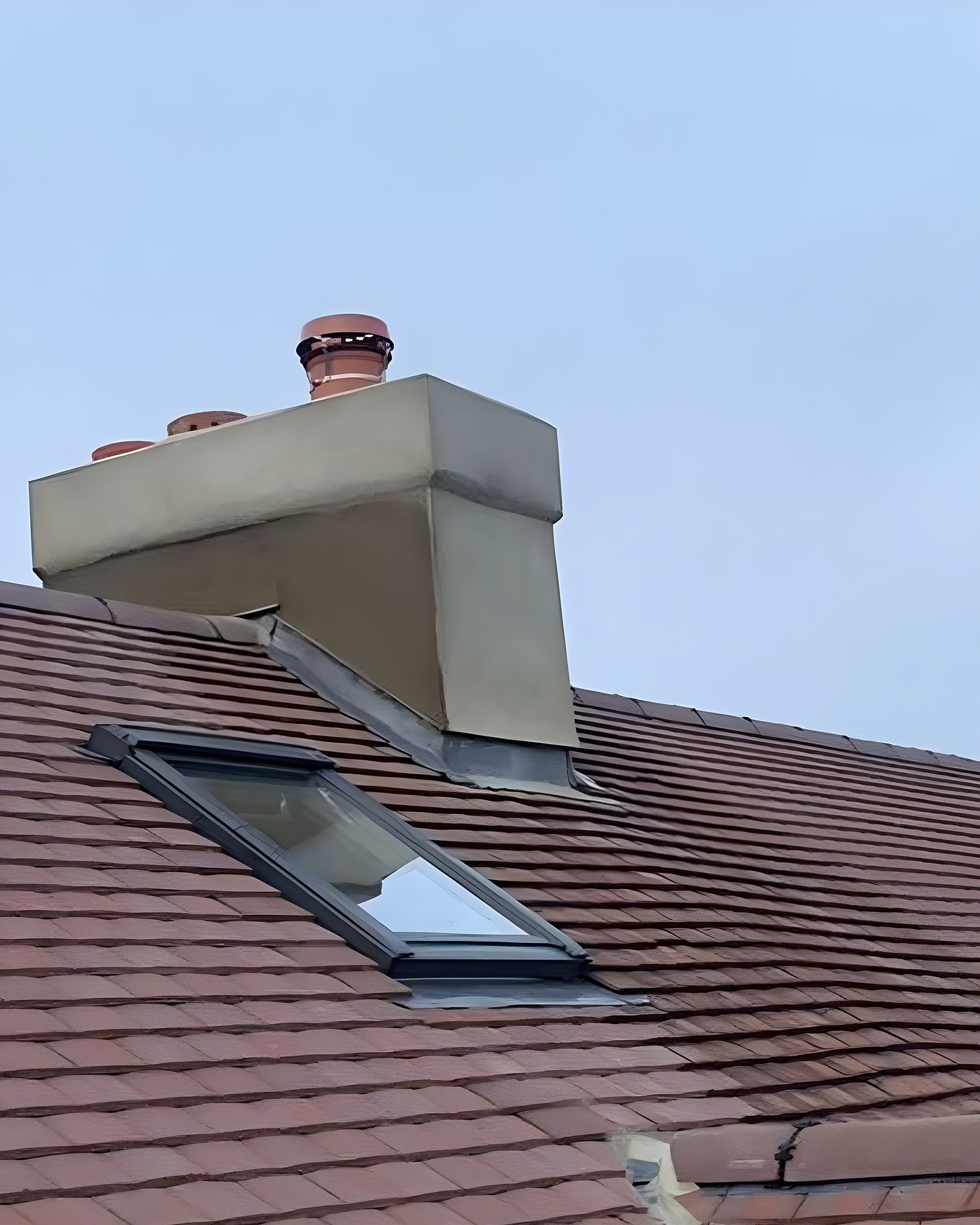
The fault we are called to most in Crawley, lit on the house.
Where We Work Across Crawley.
Every neighbourhood in RH10 and RH11, from the West Sussex line.
West Green, Northgate and Three Bridges
RH10, RH11The earliest neighbourhoods, from 1949 to 1952, around the old town and the station.
Langley Green and Ifield
RH11The north-western neighbourhoods, with the old village of Ifield absorbed into the town.
Pound Hill and Furnace Green
RH10East of the town, from 1953 and 1960.
Southgate, Tilgate and Gossops Green
RH10, RH11The southern and western neighbourhoods of the mid 1950s.
Broadfield and Bewbush
RH11The larger neighbourhoods of the 1960s and 1970s to the south-west.
Maidenbower
RH10Built privately from 1987, on the eastern side.
Forge Wood
RH10The newest neighbourhood, to the north-east, from 2014.
The Old Town Centre
RH10, RH11The High Street and the streets around it.
Why Two Jobs in Crawley Cost Different Things.
We give a written price for the work we have looked at. In Crawley these are the things that move it.
What Is Under the Tiles
On a 1950s neighbourhood house the tiles are usually fine and the underlay, battens and nails are not. Repair and re-roof are very different prices, and lifting a few tiles tells us which.
How Much Moss There Is
A heavily mossed roof takes longer to clear and fills the gutters again sooner. Clearing the roof and the gutters together costs less than doing the gutters every year.
The Flat Roofs on the Garages
Felt and GRP garage and extension roofs are priced by area and by whether a repair will hold. We tell you which before we quote.
The Questions We Get Asked in Crawley.
Yes. West Green, Northgate, Three Bridges, Langley Green, Ifield, Pound Hill, Southgate, Tilgate, Gossops Green, Furnace Green, Broadfield, Bewbush, Maidenbower and Forge Wood. Ring the West Sussex line on 01444 702 095.
Not automatically. The tiles usually have life left in them; the underlay, battens and nails under them may not. We lift a few tiles, look, and tell you honestly whether it is a repair or a re-roof.
Concrete tile on a shaded slope grows moss quickly, and Crawley's neighbourhoods have a lot of it. It holds water against the tiles and fills the gutters. We lift it off by hand and clear the gutters afterwards.
Yes. Felt or GRP fibreglass, repaired where a repair will hold and renewed with proper falls where it will not.
Yes. The newer neighbourhoods have young roofs, and when they leak it is usually a detail such as a flashing or a valley rather than the covering. Quick to find from the roof.
Nothing. We come out, look at the roof and give you a written price, with no obligation.
The Other Towns on the West Sussex Line.
Every Crawley neighbourhood, from West Green to Forge Wood, is covered from the West Sussex line. Ring 01444 702 095 for a free written quote, or the mobile at any hour.
Tell Us About the Roof in Crawley, and We'll Come and Look.
Your name, a number, the street and what you have noticed. That is all we need.