


Leadwork Cut Into the Joint,Dressed to Last.
Lead is where most roofs leak, because lead is where two different things meet. Valleys, back gutters, abutments and chimney flashing, hand-dressed.
Leadwork & Flashing in South West London, Surrey and West Sussex.
Every roof has junctions: where it meets a wall, where two slopes meet, where a chimney comes through. Tiles cannot turn a corner, so those junctions are made watertight with lead. Get the lead right and it lasts decades. Get it wrong and it is the first thing to fail.
The commonest bad repair we are called out to is mastic. Someone finds a leak at a flashing, runs a bead of sealant along it, and it works for a winter. Then the sealant hardens, cracks and lets water in behind, and now the leak is worse and harder to find.
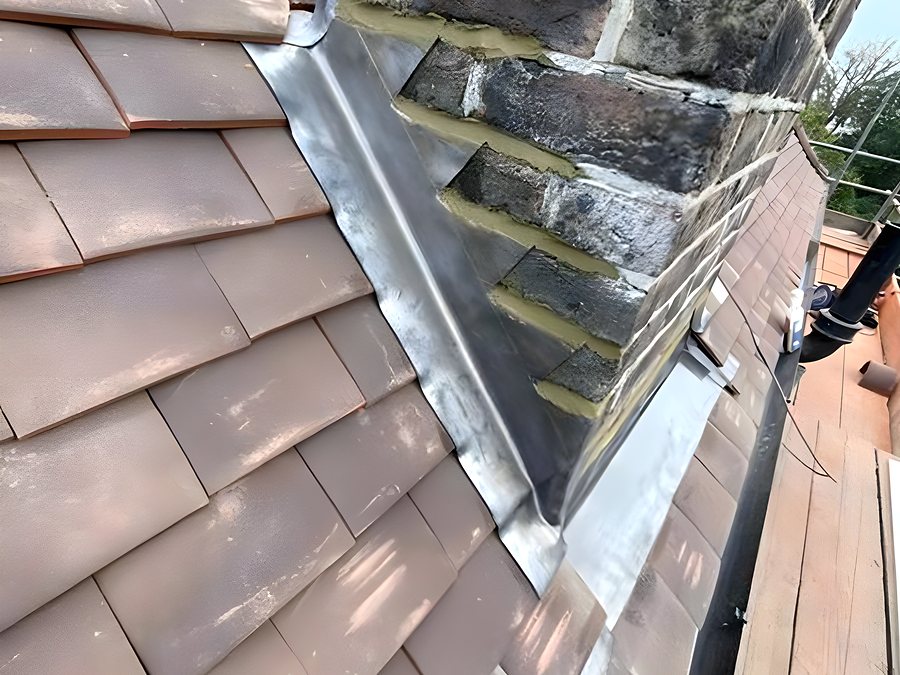
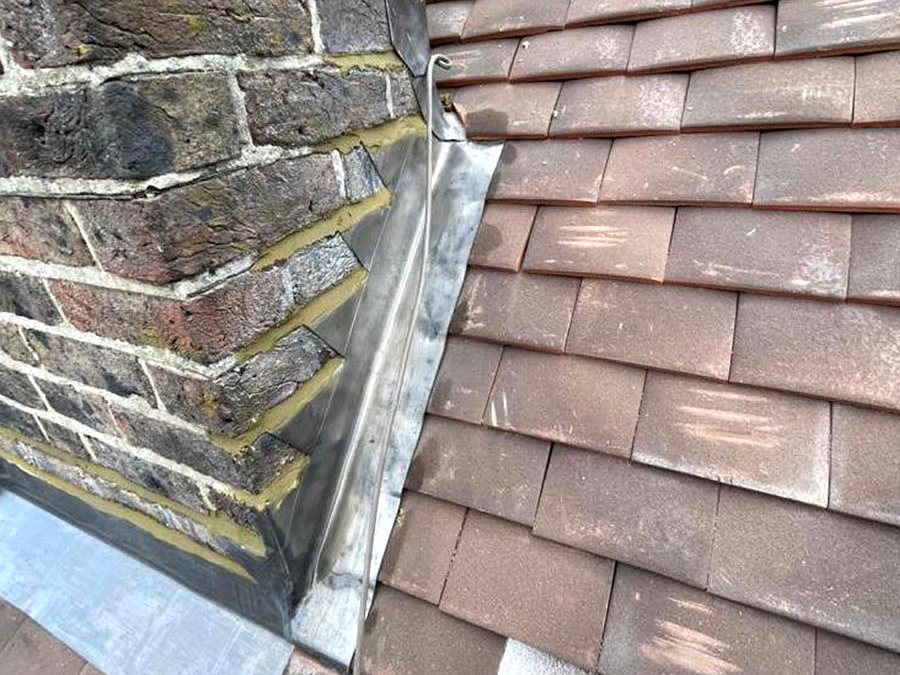
Lead is dressed by hand to the shape of the roof, cut into the brickwork joint and wedged, then pointed. It has to be the right thickness for the job and the right length, because lead moves with temperature and a piece that is too long will split itself over a few years.
If the last repair was a bead of mastic, the leak did not go away. It went quiet.
What the Work Involves.
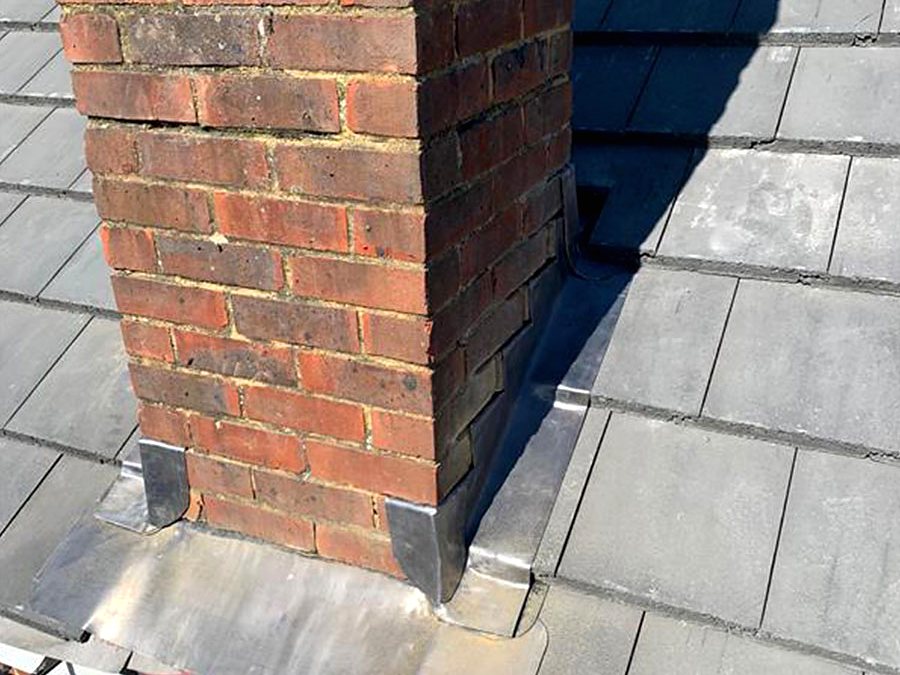
Chimney Flashing
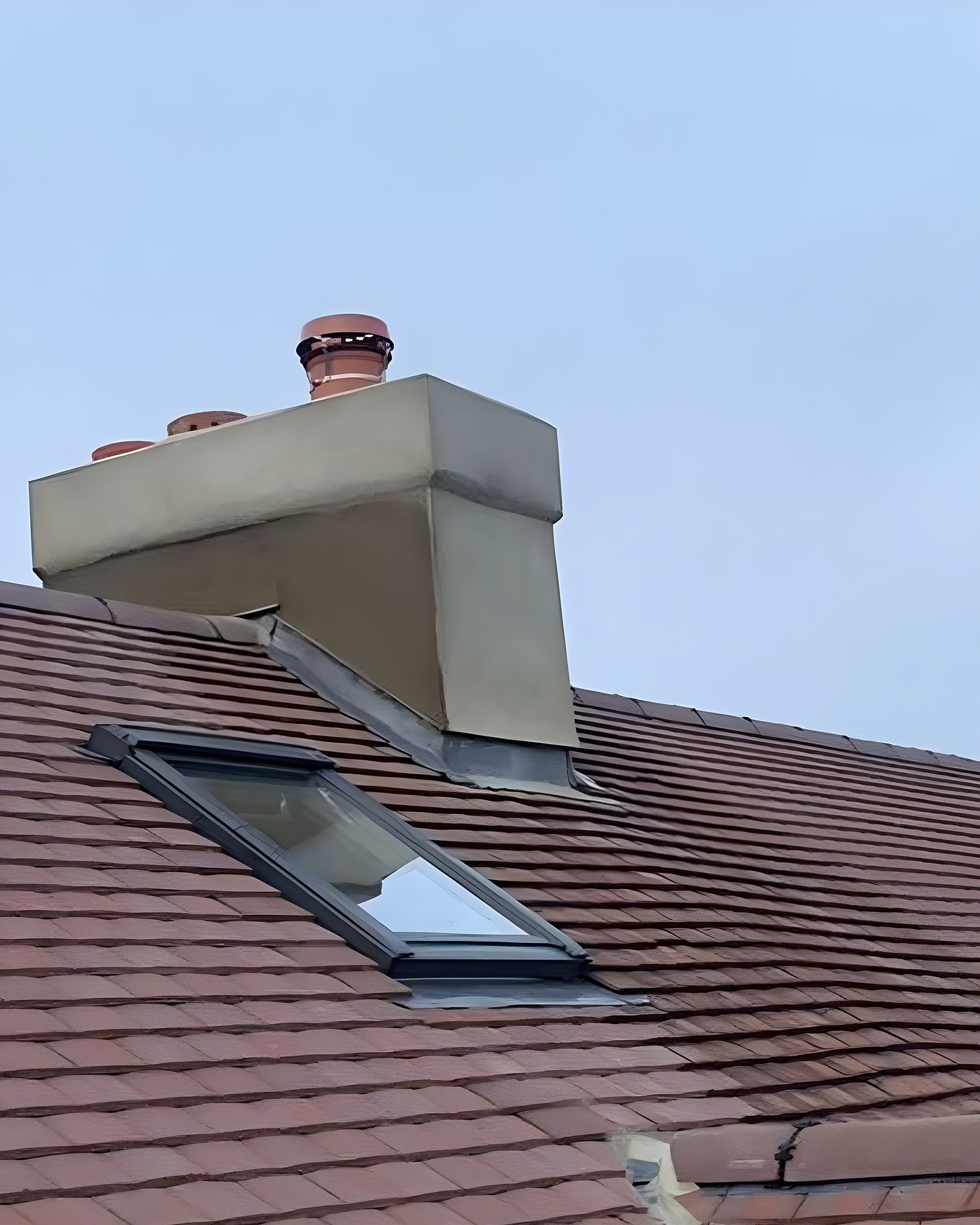
Front apron, side soakers or step flashing, and the back gutter behind the stack: the whole set, not just the visible face.
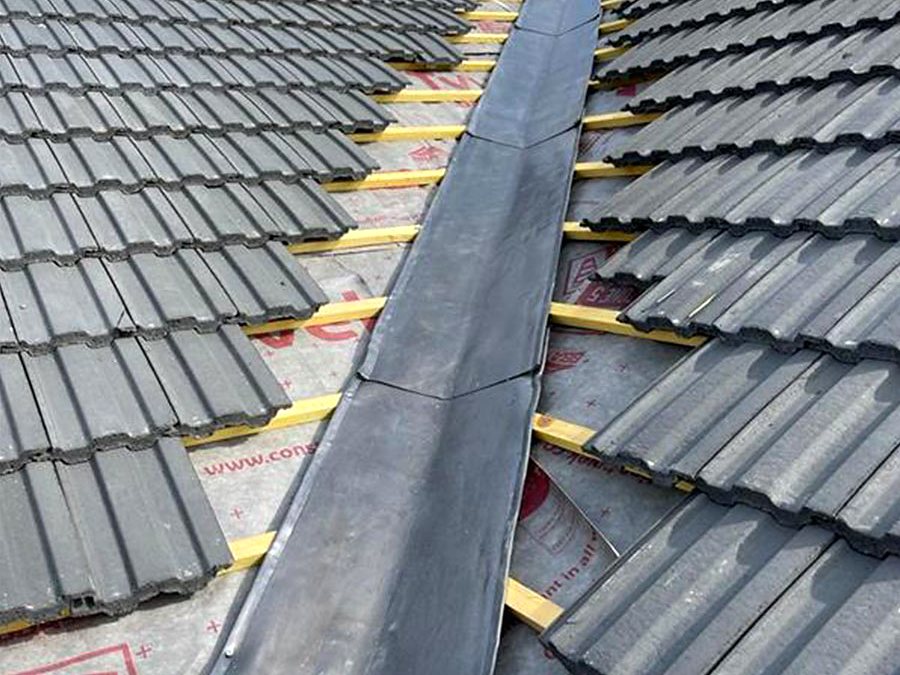
Valleys
Where two roof slopes meet. They carry a lot of water and they block with debris, so they are worth checking even when they are not leaking.
Abutments
Where a roof runs into a wall, on extensions, dormers and porches.
Parapet and Box Gutters
Hidden behind a parapet wall, invisible from the ground, and a serious leak when they fail.
Dormer Cheeks and Tops
The sides and roof of a dormer, which are all junctions and all need proper detailing.
Soakers and Step Flashing
Cut into the coursing so each tile has its own piece, rather than one long strip that will split.
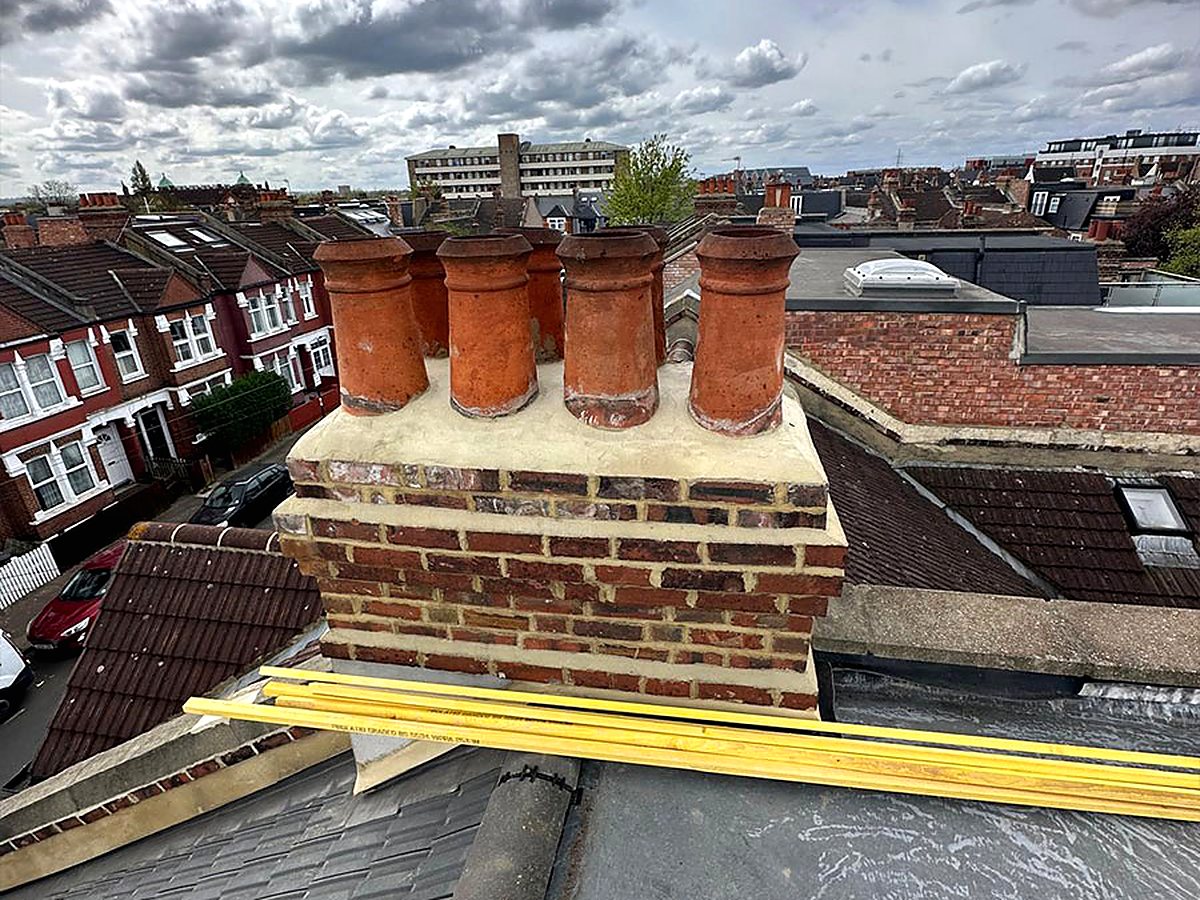
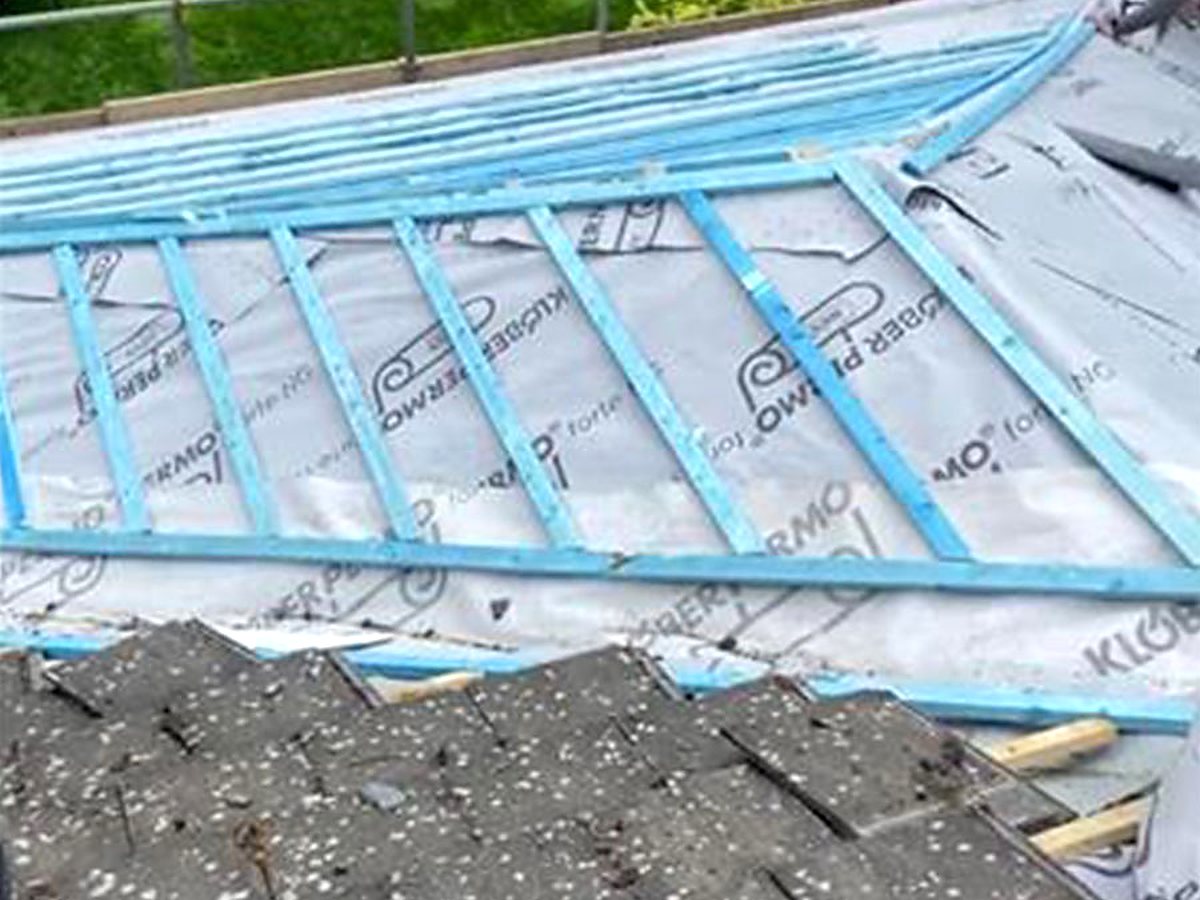
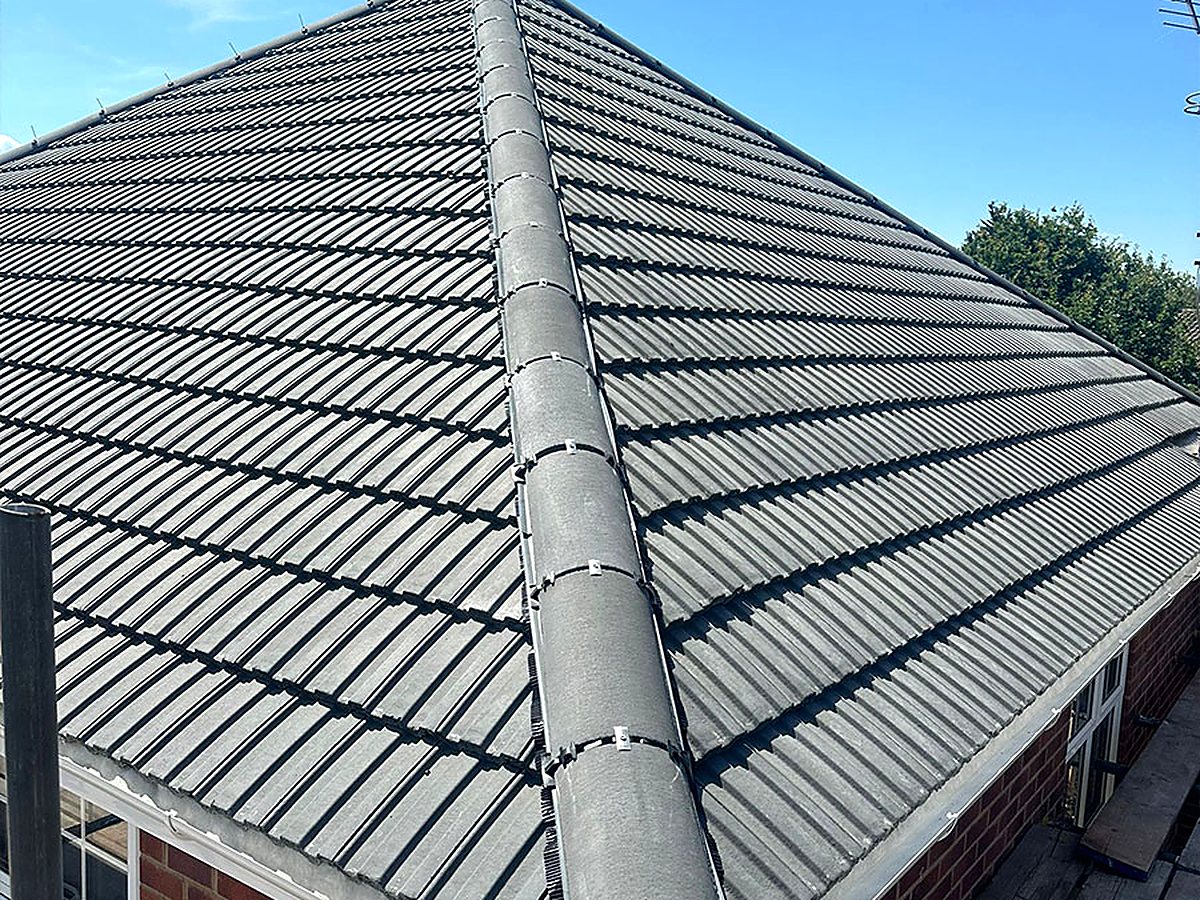
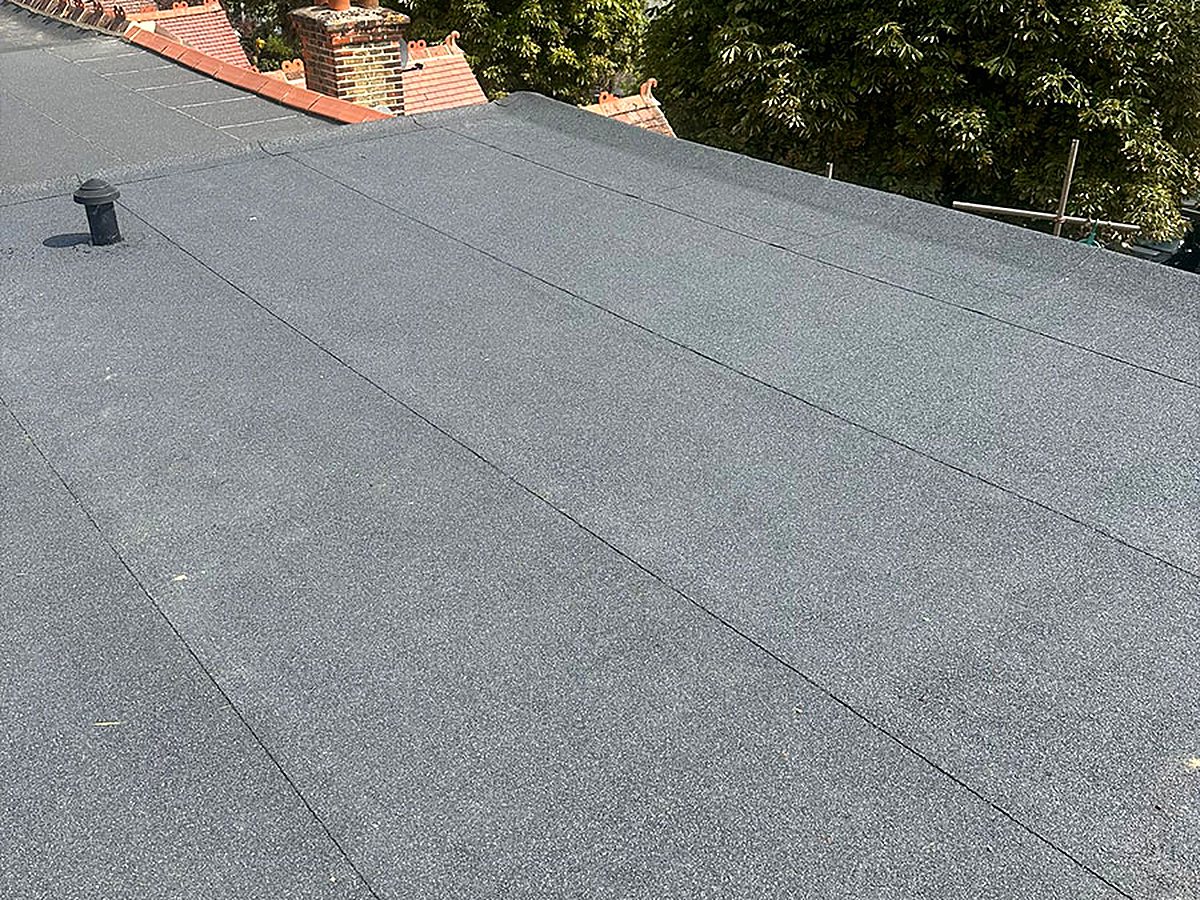
Leadwork & Flashing We Have Done.
How to Tell You Need It Looked At.
A Leak That Only Shows in Driving Rain
Classic flashing behaviour. Water is getting behind the lead when the wind pushes it.
Mastic or Sealant Visible Along a Flashing
Someone has patched it. That is a temporary fix that is now part of the problem.
Lead That Has Split or Curled at the Edge
Usually a piece that was cut too long and has moved with temperature until it tore.
A Stain That Appears Then Dries Out
Intermittent leaks are almost always junctions rather than the covering itself.
Why Two Leadwork & Flashing Jobs Cost Different Things.
We give a written price for the work we have looked at. These are the things that move it.
How We Reach It
A bungalow off a properly secured ladder and a three-storey terrace needing a scaffold are two different jobs before anyone touches the work itself.
How Much Lead and What Code
Lead comes in thicknesses, and the right one depends on where it is going and how much movement it will see.
What Has to Come Off First
Getting to a valley or a back gutter usually means lifting tiles and putting them back.
Repair or Renew
A short split can sometimes be dealt with. A flashing that was wrong from the start needs redoing properly.
The Questions We Get Asked About Leadwork & Flashing.
Usually one of three things: it was cut too long, so temperature movement has split it; it was never chased into the joint properly and has worked loose; or it has been patched with mastic, which hardens and cracks and then lets water in behind.
A short split can sometimes be dealt with. But if the original detail was wrong (the wrong length, not chased in, or the wrong lap) repairing it just delays the next failure. We will tell you which situation you are in.
As a genuine emergency measure to keep water out until it can be done properly, yes. As a permanent repair, no. Sealant hardens and cracks, and then water gets in behind it where you cannot see it.
The lead gutter behind a chimney stack, running across the slope, that takes water round the stack. It is invisible from the ground, it fills with debris, and when it blocks the water goes straight into the roof.
Properly detailed lead is a long-life material, and it is one of the reasons it is still used on buildings hundreds of years old. What fails is usually the detailing rather than the metal, which is why the way it is fitted matters more than anything.
Tell us what the building is when you call. Listed buildings and conservation areas have their own requirements and there may be a reason the original detail has to be matched. We would rather know before we quote.
Four Steps From Your Call, to the Job Done.
You Call or Send the Form
Tell us your town and what you have noticed. A photo from the ground helps more than you would think.
We Come and Look
At the actual thing, where it is safe to get to it. You hear what has failed and what it takes to put right, in plain words.
You Get a Written Price
For the work we have described, with time to think about it. If there is a word on it you do not recognise, ask and we will explain it.
We Do the Work and Clear Up
Agreed dates before we start, and everything off the drive when we finish.
Leadwork & Flashing Across Fourteen Towns.
South West London, Surrey and West Sussex. There is a local number for each area, plus a mobile. If you are just outside, ask anyway.
Other Things We Get Called Out For.
Tell Us About the Leadwork & Flashing, and We'll Come and Look.
Your name, a number, roughly where you are and what you have noticed. That is all we need.