


Chimney Repairs,Repointing and Flashing.
A leak near a chimney is usually the flashing or the mortar rather than the tiles around it. Repointing, part rebuilds, new pots and fresh lead.
Chimney Repairs in South West London, Surrey and West Sussex.
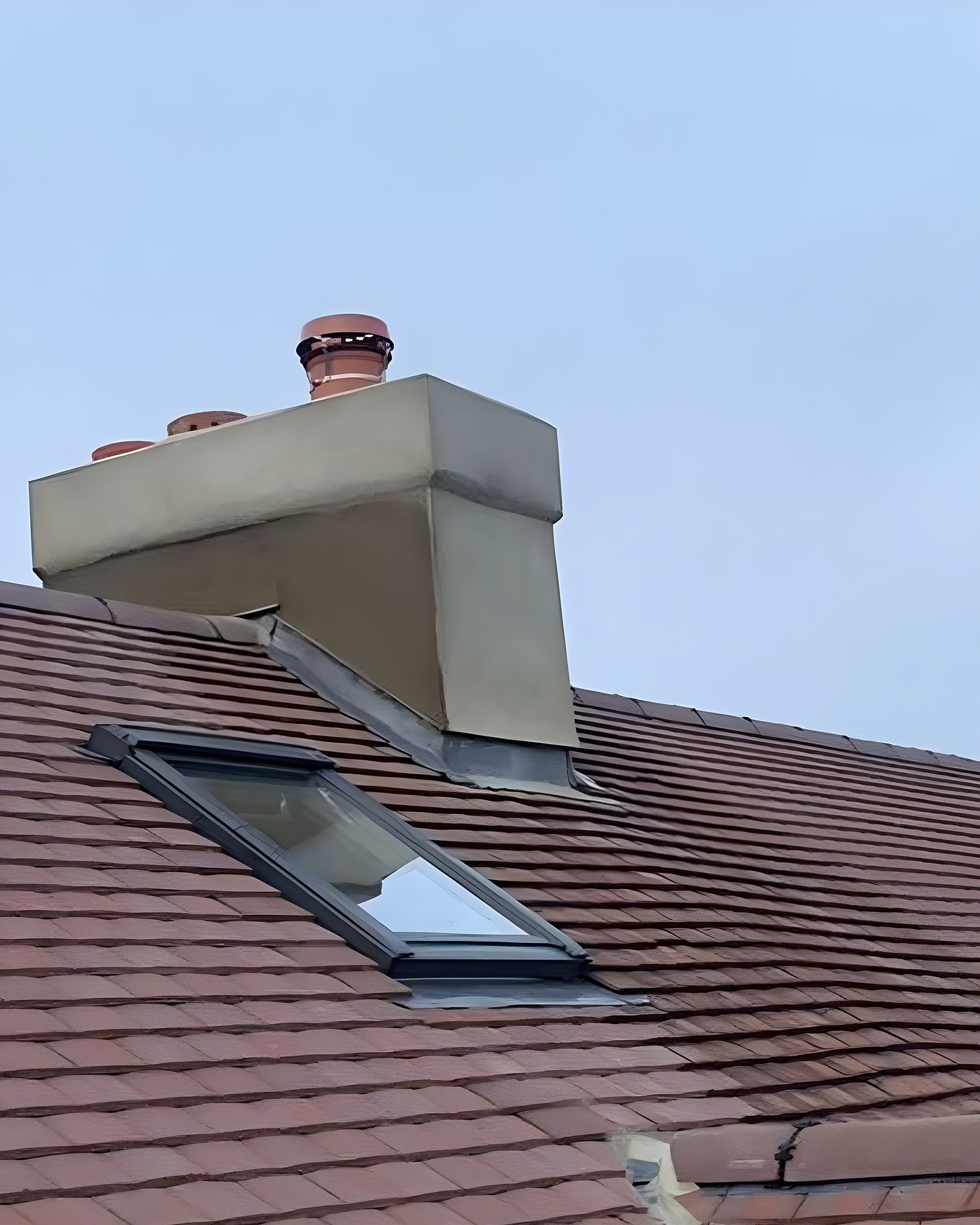
A chimney stack takes weather from every side and gets no help from the roof around it. It is the most exposed masonry on the building, and it is where a lot of roof leaks start. even when the stain on the ceiling appears some distance away.
The two usual culprits are the mortar and the lead. Frost gets into open joints, the pointing opens up further and the stack starts taking on water rather than shedding it. Or the flashing where the stack meets the roof slope has lifted, split or been patched with mastic by someone in a hurry.
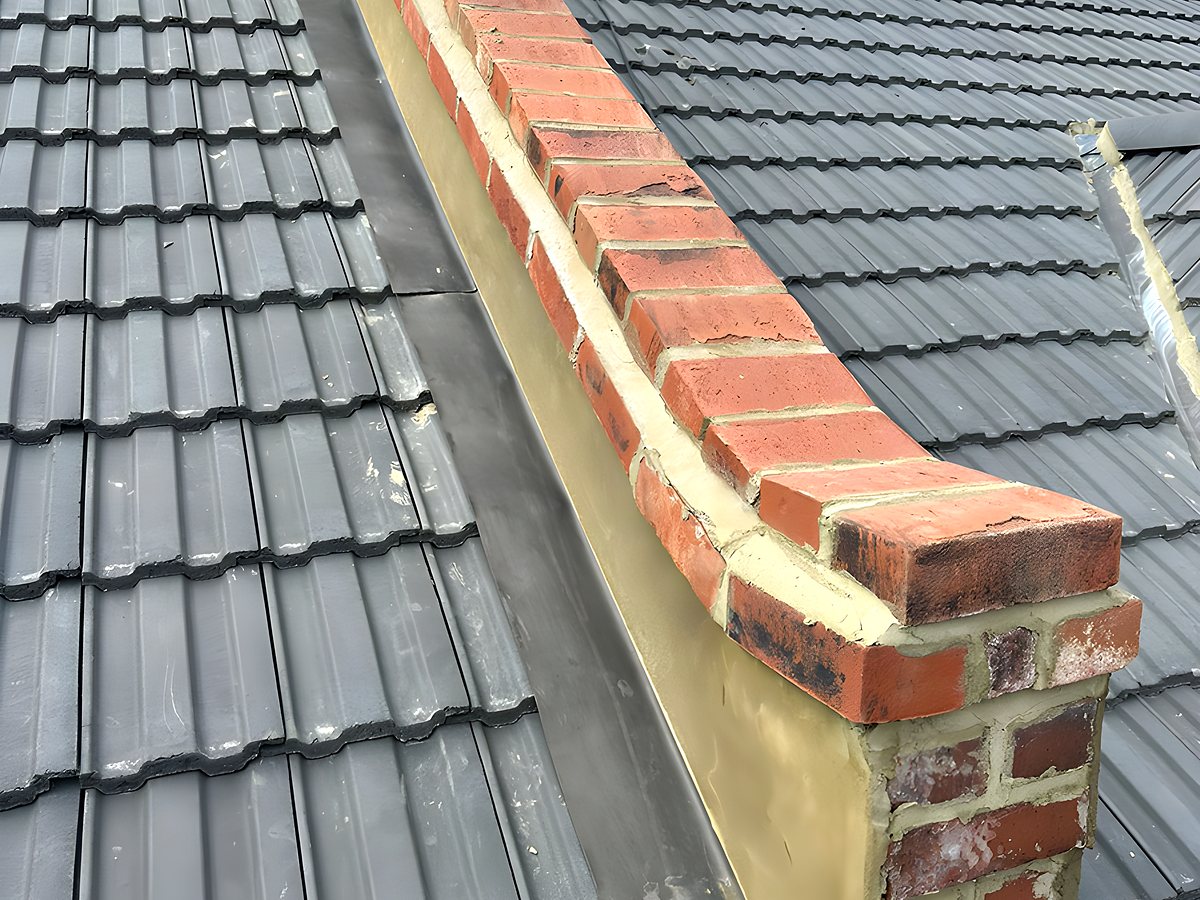
We repoint, rebuild the top courses where the brickwork has perished, replace pots and fit fresh lead flashing chased properly into the joints. Where a stack is genuinely past saving we will say so rather than repointing something that needs rebuilding.
The stain on the ceiling and the fault on the roof are hardly ever in the same place.
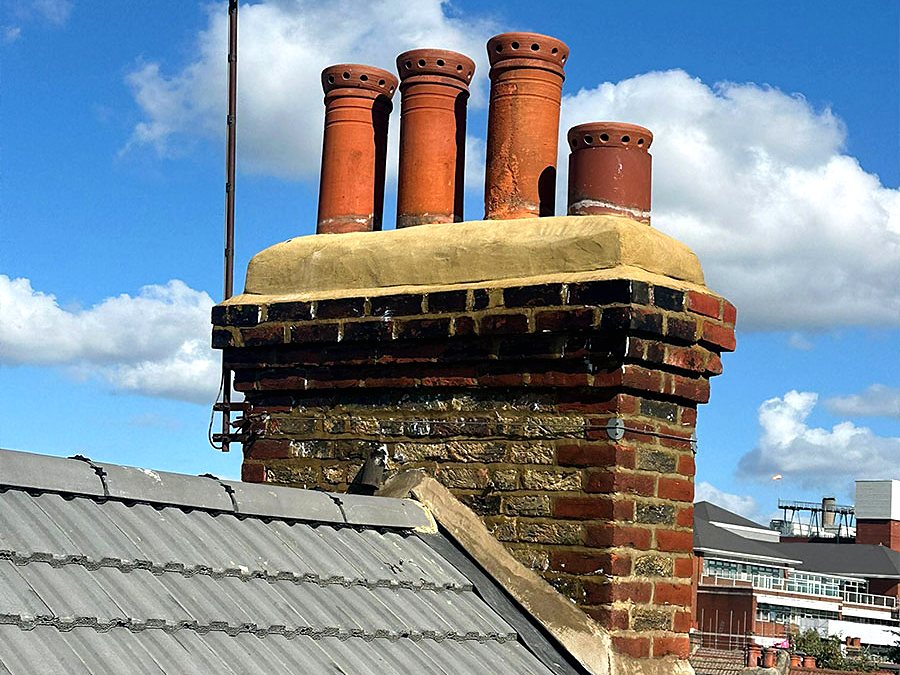
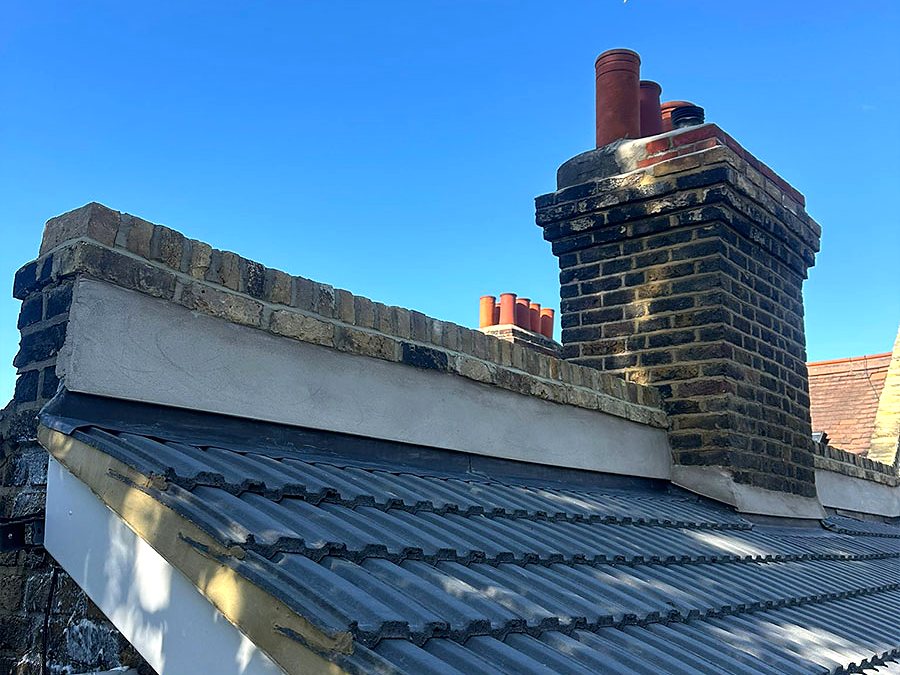
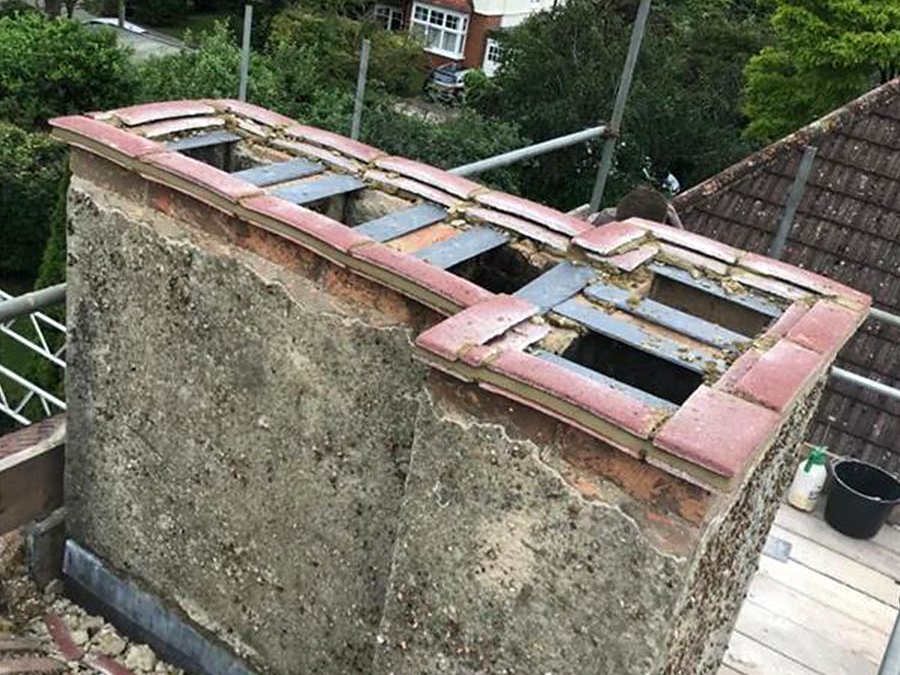
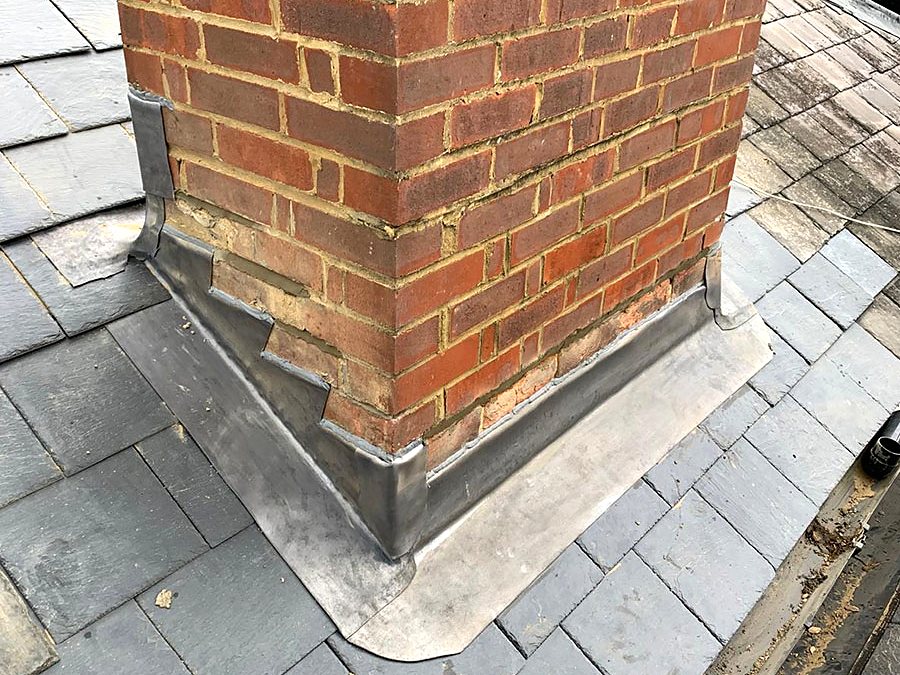
Chimney Repairs We Have Done.
Tick What You Have Noticed.
Four things people notice from the ground or the loft. Tick the ones that apply and we will say what they usually mean.
Nothing ticked yet. If the stack looks fine from the ground, a look at the flashing and pointing every few years is all it needs.
What the Work Involves.
Repointing
Perished mortar raked out and replaced so the stack sheds water instead of soaking it up.
Part Rebuilds
The top courses taken down and rebuilt where the brickwork has broken down beyond pointing.
New Pots and Flaunching
Pots reset and the mortar bed across the top of the stack renewed, which is where a lot of water gets in.
Lead Flashing
Fresh lead at the front, sides and back of the stack, dressed and chased into the joint rather than sealed over with mastic.
Back Gutters
The hidden gutter behind a stack, which fills with debris and puts water straight through the roof when it blocks.
Capping Unused Stacks
Capped so rain stays out but the flue can still breathe, rather than sealed solid.
How to Tell You Need It Looked At.
A Stain on the Ceiling Near the Chimney Breast
Usually the flashing or the mortar. It rarely means the tiles around the stack.
Crumbling Mortar You Can Pick Out With a Finger
The pointing has gone. Water is getting into the joints and freezing there.
Damp on the Chimney Breast Inside
Water coming down through the stack itself rather than in at the roof line.
A Pot Leaning, or Bits of Mortar in the Gutter
The flaunching across the top has broken up. Worth dealing with before a pot moves.
Why Two Chimney Repairs Jobs Cost Different Things.
We give a written price for the work we have looked at. These are the things that move it.
How We Reach It
A bungalow off a properly secured ladder and a three-storey terrace needing a scaffold are two different jobs before anyone touches the work itself.
How Much of the Stack Is Involved
Repointing one face, repointing all four, or taking the top courses down and rebuilding are three different jobs.
Scaffold
Most chimney work needs a proper platform around the stack, and that is a real part of the cost on a two or three storey house.
Repair or Replace
One failed section is a short job. A run that has reached the end of its life is a replacement. We tell you which it is before you commit to anything.
The Questions We Get Asked About Chimney Repairs.
Look at the mortar joints from the ground with binoculars if you can. If they are recessed, crumbling, or you can see daylight or gaps, the pointing has gone. Bits of mortar appearing in the gutter below is another reliable sign.
Water is getting into the stack and travelling down. That can be open pointing, a broken mortar bed across the top, a missing or cracked pot, or failed flashing at the roof line. Which one it is decides what the repair costs, so it is worth having it looked at properly.
You do not have to. A disused stack can be capped so rain stays out while the flue still breathes, which is usually cheaper than removal and keeps the roofline as it was. Removal is a bigger job affecting the roof structure, so it is worth talking through.
The sloping bed of mortar across the top of the stack that holds the pots in and sheds water off the top. It is exposed to everything and it breaks down before the brickwork does, so it is a common repair.
Almost always. Working on a stack means working at the highest point of the building, and that needs a proper platform with edge protection, not a ladder. We factor that into the quote and tell you what it involves.
We try to. On older property the mortar mix matters as much as the brick. A hard modern mix on soft old brick can do damage. Tell us what the building is and we will talk about the right approach.
Four Steps From Your Call, to the Job Done.
You Call or Send the Form
Tell us your town and what you have noticed. A photo from the ground helps more than you would think.
We Come and Look
At the actual thing, where it is safe to get to it. You hear what has failed and what it takes to put right, in plain words.
You Get a Written Price
For the work we have described, with time to think about it. If there is a word on it you do not recognise, ask and we will explain it.
We Do the Work and Clear Up
Agreed dates before we start, and everything off the drive when we finish.
Chimney Repairs Across Fourteen Towns.
South West London, Surrey and West Sussex. There is a local number for each area, plus a mobile. If you are just outside, ask anyway.
Other Things We Get Called Out For.
Tell Us About the Chimney Repairs, and We'll Come and Look.
Your name, a number, roughly where you are and what you have noticed. That is all we need.