


Roof Leaking?What to Do, and Where to Look.
The stain on the ceiling is hardly ever under the hole in the roof. Here is what to do first, where leaks usually start, what you can safely check yourself, and when it is time to ring us.
Five Things to Do Before Anything Else.
If water is coming through right now, these come first, in this order.
- Keep people out of the room, and keep hands off anything electrical near the water.
- If the water is near a light fitting, turn the power off at the fuse box only if you can reach it safely and dry handed, then get an electrician to check it.
- Catch the drips in buckets and soak up the rest with towels. Stay out from under any ceiling that is bulging.
- Photograph the damage indoors, and the roof from outside at ground level.
- Stay off the roof, and ring our 24 hour emergency line on 07377 633898.
Our page on emergency roof repairs explains what happens after that. If the leak has stopped and you are trying to work out where it came from, read on.
The Usual Suspects, Roughly in Order.
Water runs down the underside of the felt and along the timbers before it drops, so a stain on the ceiling can be some way from the fault. These are the places we look first.
Flashings at Chimneys and Walls
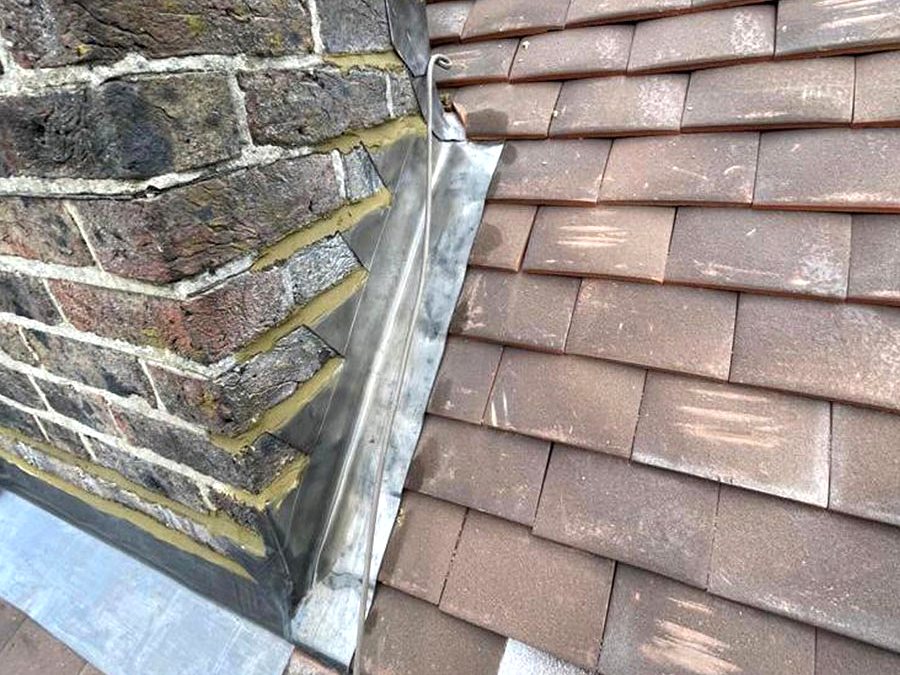
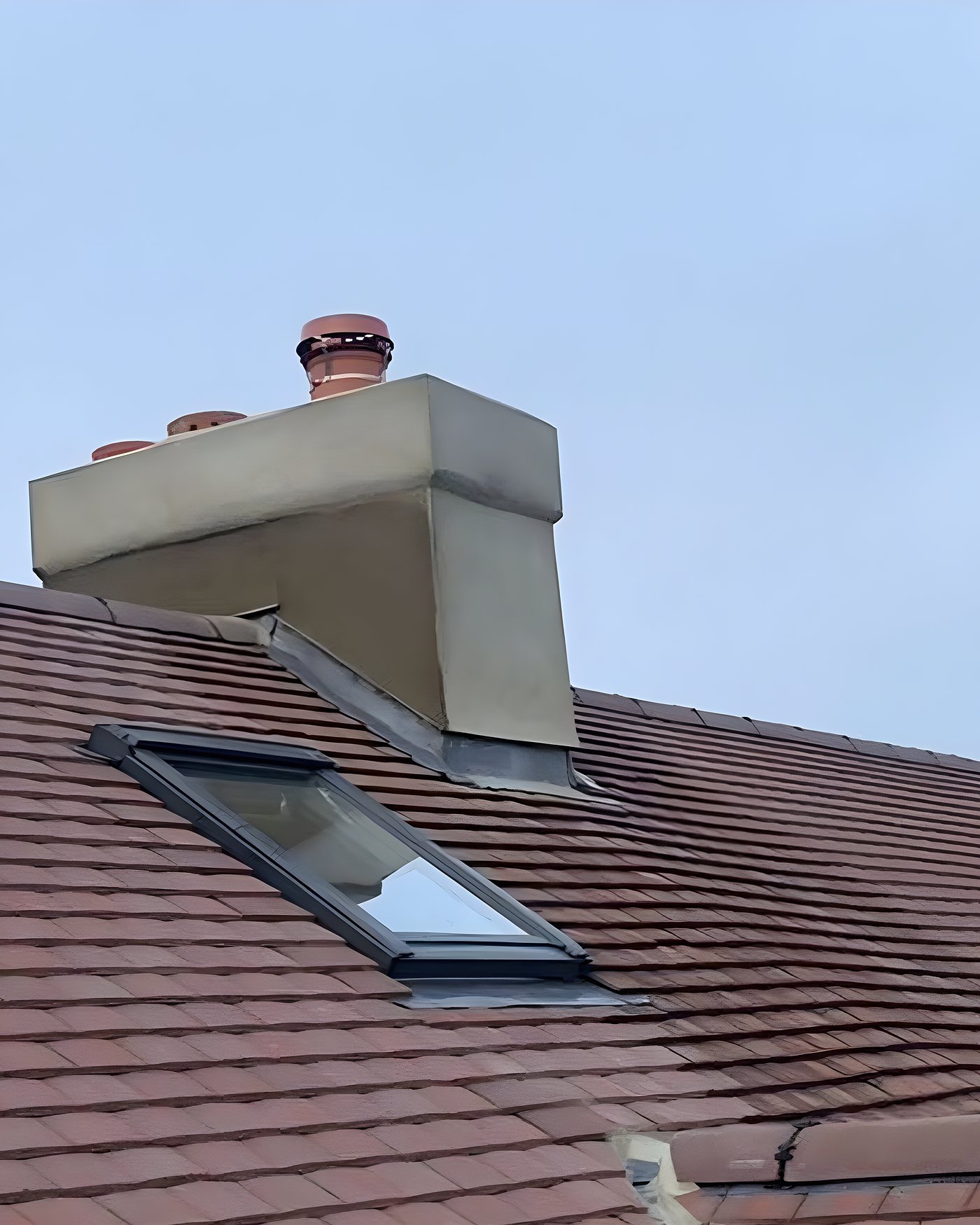
Wherever the roof meets brickwork, lead or a mortar fillet seals the joint. When the lead lifts or the mortar cracks, water runs straight down behind it. This is where most leaks begin. More on leadwork and flashing.
Valleys
The channel where two roof slopes meet carries the water from both. Leaves and moss block it, it backs up, and water spills under the tiles on either side.
Slipped, Cracked or Missing Tiles
A single gap lets wind blown rain reach the felt underneath. On an older roof the nails rust through and tiles slide out one at a time.
Ridges and Hips
The mortar under ridge and hip tiles cracks with age and lets water in along the top of the roof.
Tired Felt Under the Tiles
Tiles shed most of the rain and the felt beneath catches what gets past. On older roofs that felt can perish and tear, and wind driven rain finds its way through.
The Chimney Stack Itself
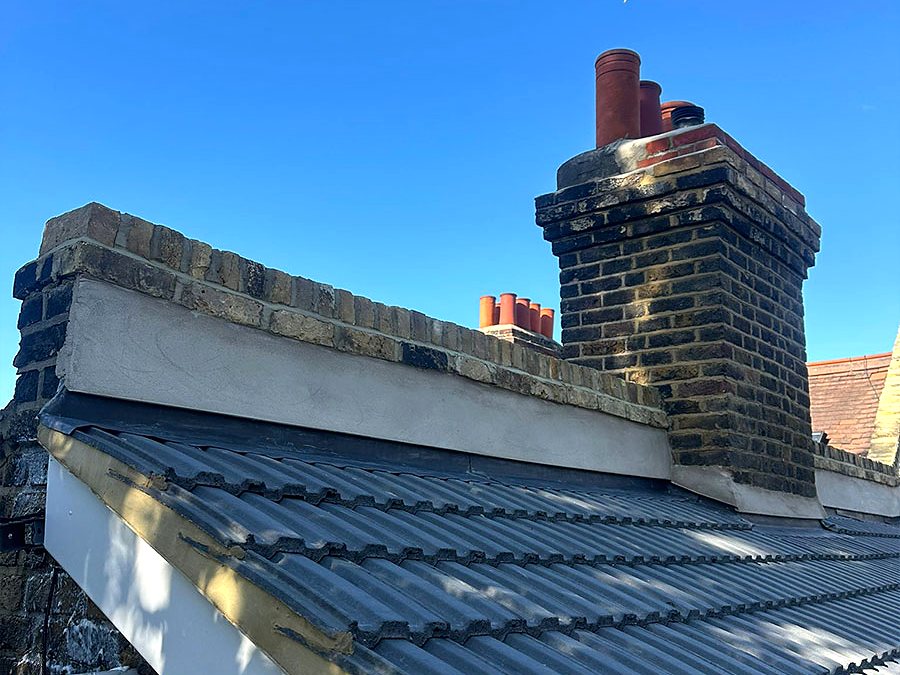
Open pointing, cracked flaunching or an uncapped pot lets rain into the stack, and it shows as damp on the chimney breast inside. More on chimney repairs.
Flat Roofs and Roof Windows
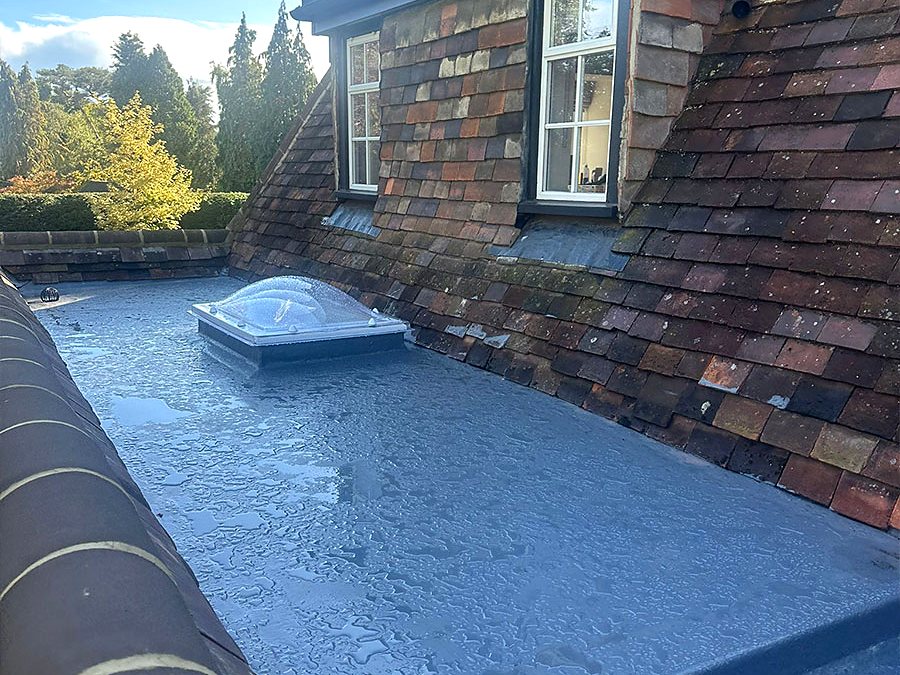
Splits, blisters and failed edges on a flat roof, and the flashing around a roof window, are common sources. Water can travel a long way across a flat roof before it shows. More on flat roofing.
Gutters, Not the Roof at All
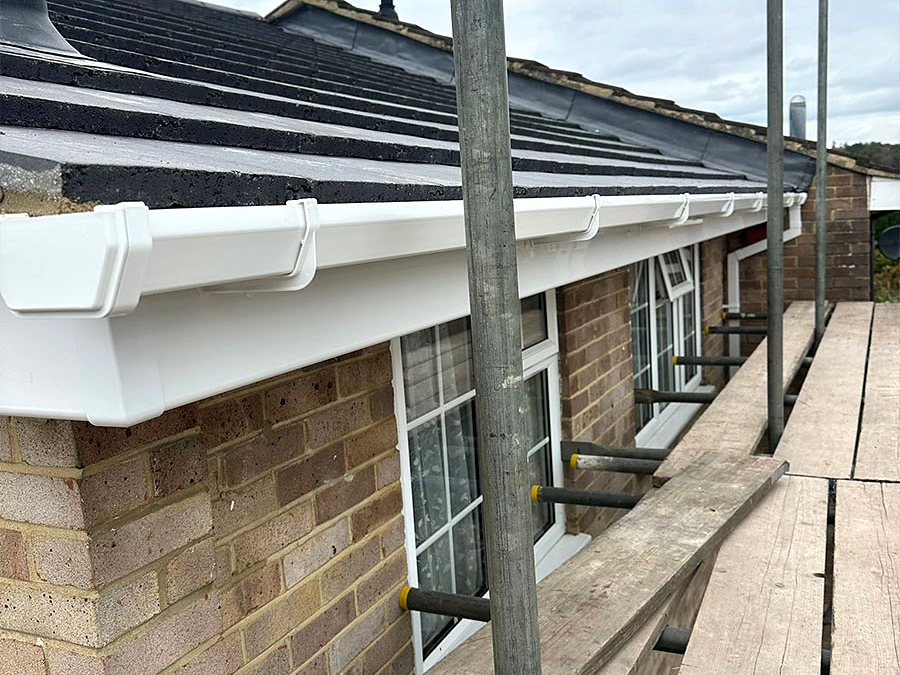
A blocked or sagging gutter overflowing down the wall leaves a stain at the top of an outside wall that looks just like a roof leak. More on gutter repairs.
Condensation in the Loft
Drips from nail tips and damp felt on cold mornings, with no rain at all, usually mean warm, moist air from the house condensing in the loft rather than a leak.
What the Damp Is Telling You.
Where and when the water shows narrows it down a long way before anyone goes up a ladder.
Only After Wind and Heavy Rain
Usually rain driven past a tile, a flashing or tired felt on the side the weather comes from. Note the wind direction next time it happens.
Damp on the Chimney Breast
Water getting into the stack: the pointing, the flaunching, a pot, or the flashing where the stack meets the roof.
A Stain Where Ceiling Meets Outside Wall
Often the gutter overflowing, or water getting in at the eaves, rather than the main slope of the roof.
Drips in the Loft on Cold, Dry Mornings
Condensation. Check the loft is ventilated and that insulation is not packed against the eaves.
A Ceiling Under a Flat Roof
The covering, an edge, an upstand against a wall, or a blocked outlet. The water can show well away from the fault.
Around a Roof Window
The flashing kit around the window, or the window seal itself, rather than the tiles.
What You Can Check Without a Ladder.
Two places are worth a look before you ring: the roof from the ground, and the loft from the inside.
From the Ground
Binoculars help. Look for:
- tiles out of line, gaps, or pieces of tile in the gutter
- lead standing away from a chimney or wall
- cracked or missing mortar along the ridge
- moss or leaves filling a valley
- a gutter overflowing during a downpour
- dark streaks down the wall below the gutter
From the Loft
With a torch, standing only on joists or boards. Look for:
- daylight showing through
- wet or stained timber, then follow the stain uphill to where it starts
- damp, torn or sagging felt
- wet insulation
- droplets on nail tips on cold, dry mornings, which points to condensation
Please do not go on the roof or up a ladder to look. If what you find points to a fault, ring us and tell us what you saw.
Where Leaks Start, Put Right.
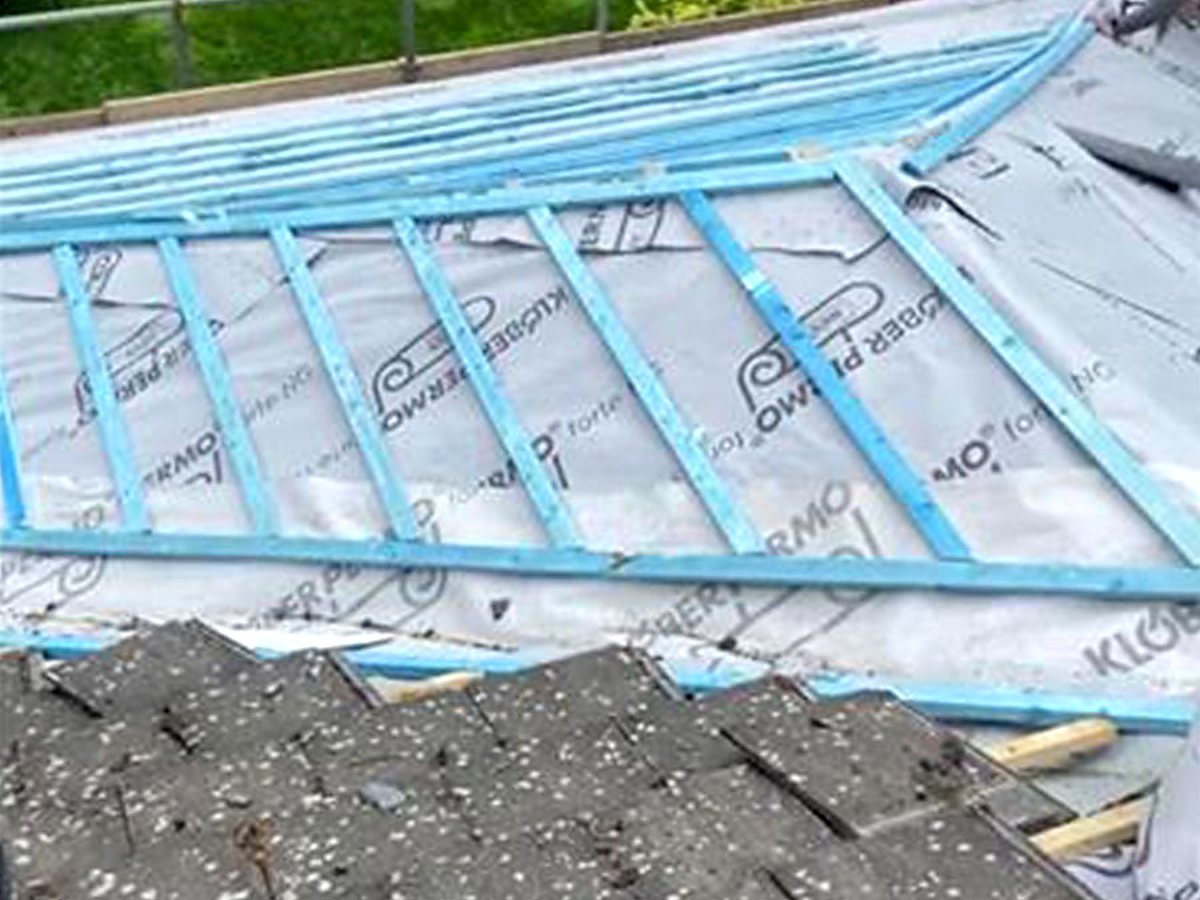
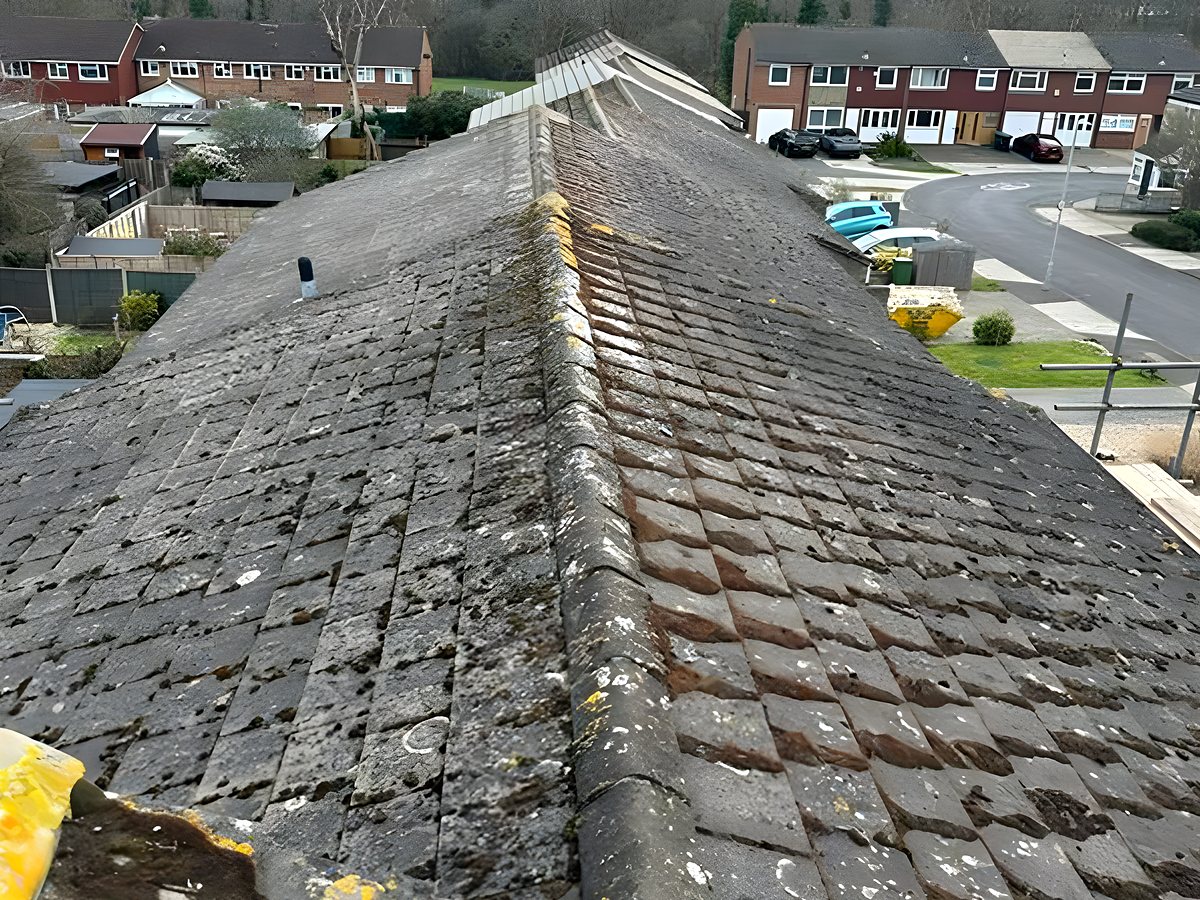
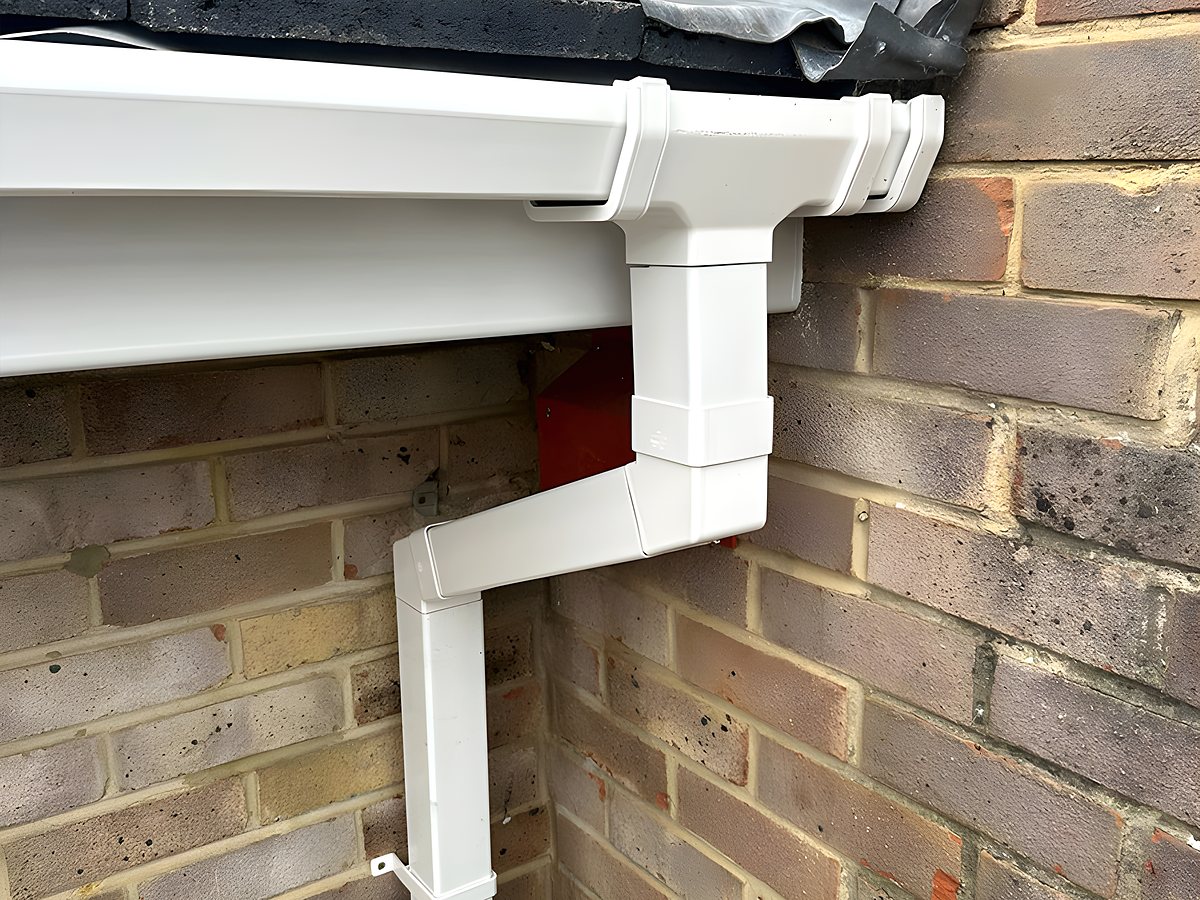
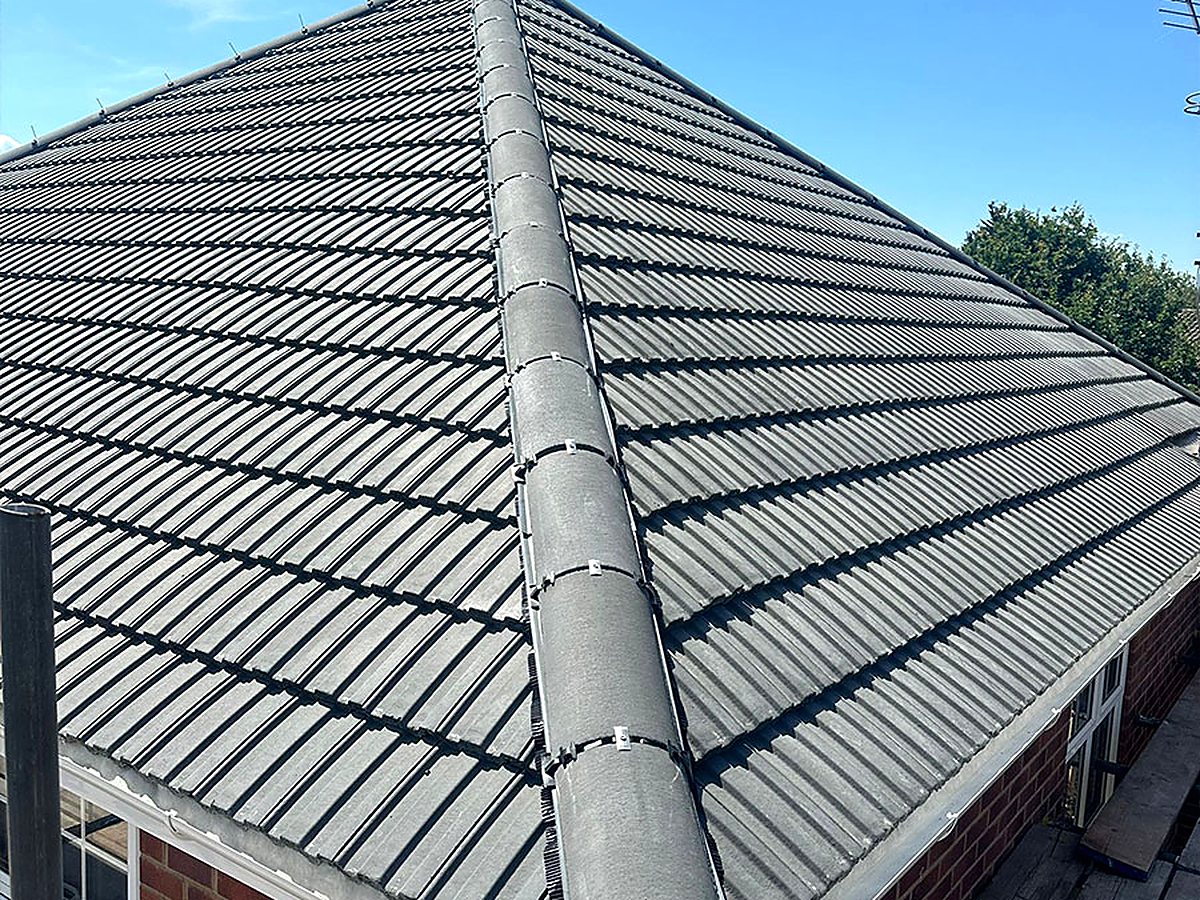
Flashings, a chimney, new guttering and a flat roof. All of them are our own jobs, and any photo opens larger.
When It Is Time to Call a Roofer.
Straight away if water is coming in now, if tiles, ridge pieces or anything else is loose above a path or a door, or if a storm has visibly damaged the roof. Ring the 24 hour line on 07377 633898.
Soon if a stain keeps growing, if the same patch comes back every winter, or if you have spotted something from the ground or in the loft. Small leaks get bigger, and water held in timber and plaster does damage you cannot see. Our roof repairs page covers what that work involves.
If you are not sure, tell us what you have noticed. We will tell you what it usually means.
Roof Leak Questions.
Usually because the wind is driving rain sideways past a tile or a flashing, or because a gutter or valley that copes with light rain backs up and overflows in a downpour. If it only happens when the wind comes from one direction, the fault is usually on that side of the roof.
If the damp shows on cold, dry mornings with no rain, and you can see droplets on nail tips or the underside of the felt, it is most likely condensation. Leaks follow the weather. Condensation follows the temperature.
Roofs age slowly and fail suddenly. Mortar cracks, nails rust, felt perishes and valleys silt up over the years, and then one storm or one wet winter finds the weak point.
Rarely. Most leaks come from one fault: a lifted flashing, a slipped tile, a blocked valley. A roof is due for replacement when the felt, battens and fixings have gone, not because one part of it has failed.
Usually only when the leak comes from sudden damage, such as a storm lifting tiles. Gradual wear, like perished felt or cracked mortar on an old roof, tends to count as maintenance. The wording of your own policy decides it, so check it before you assume.
Sooner is cheaper. Water that sits in timber, insulation and plaster does damage long before it shows as a stain, and a small fault left through a winter rarely stays small.
Roofers in Fifteen Towns, From Horley Outwards.
We are based in Horley and work across Surrey, West Sussex and South West London, with a local number for each area as well as the 24 hour mobile.
The Work That Stops a Leak.
Tell Us About the Leak, and We'll Come and Look.
Where the water shows, when it happens and roughly where you are. That is enough for us to come and look. If it is coming in now, ring 07377 633898.