


Roofers in Epsom,From the Downs to Ewell.
Epsom sits on the spring line where the chalk of the North Downs meets the London clay, and its housing runs from the 1860s terraces near the station to the estates built on the old hospital sites in the 2000s. We look after roofs across all of it from the Surrey line.
Roofing and Guttering in Epsom, on the Surrey Line.
The town's Victorian streets went up along Burgh Heath, College and Worple Roads from the 1860s, and terraced housing followed once the common fields were enclosed. The real growth came between the wars, when the council built well over a thousand houses and private estates such as Copse Edge Avenue and Epsom Wells went up, and when Ewell joined the urban district in 1933.
Then there is Horton. Five psychiatric hospitals once stood on the western side of the town, and in the early 2000s their sites were redeveloped for housing, so a whole district of Epsom has roofs that are barely twenty years old next to Victorian hospital buildings that were converted. Add Langley Vale below the racecourse, developed through the first half of the twentieth century, and the large houses around Woodcote, and you have a town with every kind of roof.
We cover KT17, KT18 and KT19, which takes in Epsom, Ewell, Stoneleigh, West Ewell, Langley Vale and Epsom Downs, on the Surrey line 01372 632 128.
The Roofs of Epsom, and What Each One Needs.
The Victorian Terraces Near the Station
Slate and clay tile on the streets that grew from the 1860s, with the stacks, valleys and back additions that come with any terrace of that age.
The Inter-War Estates
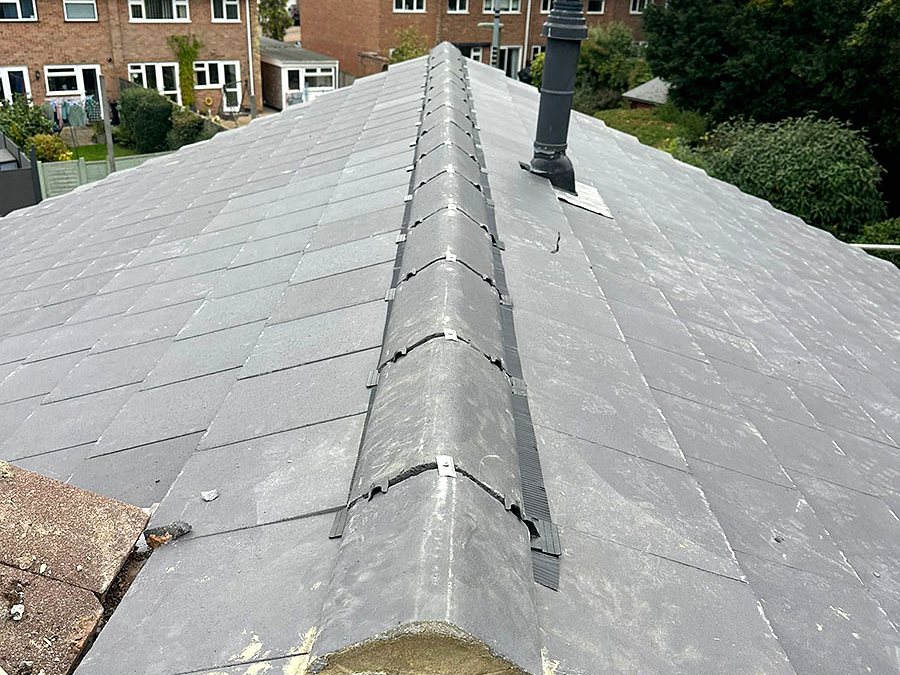
Copse Edge Avenue, Epsom Wells and the council housing of the 1920s and 1930s: hipped roofs in clay or concrete tile, with underlay and fixings now around ninety years old and long eaves that need sound fascias behind the gutters.
Ewell, Stoneleigh and West Ewell
Largely 1930s semis and bungalows, plus the older village core around Ewell. Fascia, soffit and gutter renewals make up much of the work here.
The Horton Estates and Langley Vale
Modern houses on the former hospital sites, where the first faults are usually at the details: a flashing, a valley, a blocked outlet. And Langley Vale, developed through the early twentieth century below the Downs.
What We Get Called to in Epsom.
Re-Roofing
Inter-war semis stripped to the rafters and rebuilt in tile with new underlay, battens and fixings, when the roof has genuinely reached the end.
New Roofs explained02Gutter Replacement
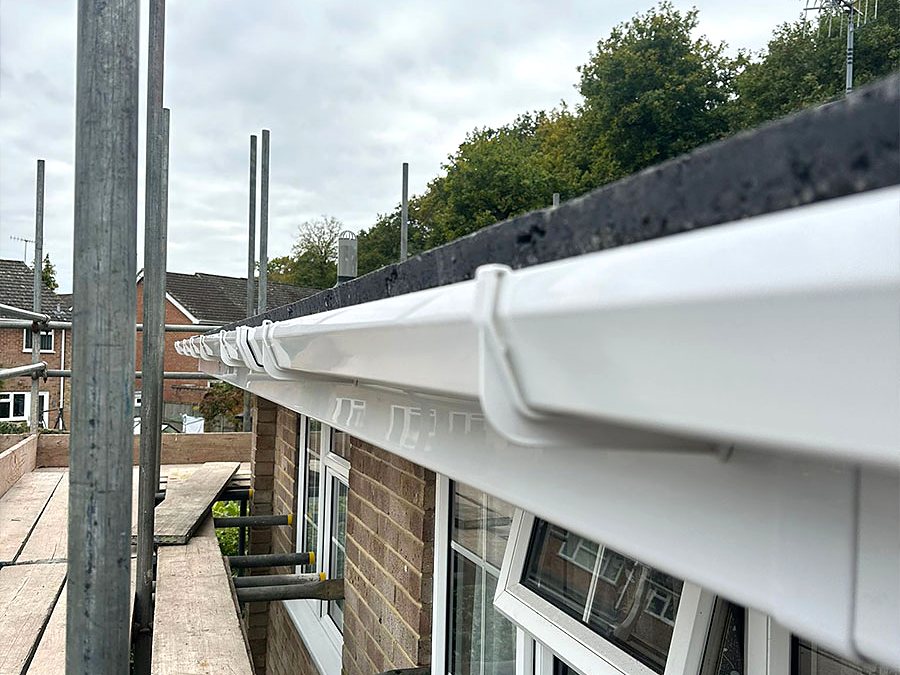
New uPVC runs hung to a proper fall along the long eaves of the 1930s streets, with the fascia checked and replaced where the timber has gone.
Gutter Replacement explained03Roof Cleaning
Moss lifted off concrete tile on the shaded slopes, and the gutters it has filled cleared out afterwards.
Roof Cleaning explained04Chimney Repairs
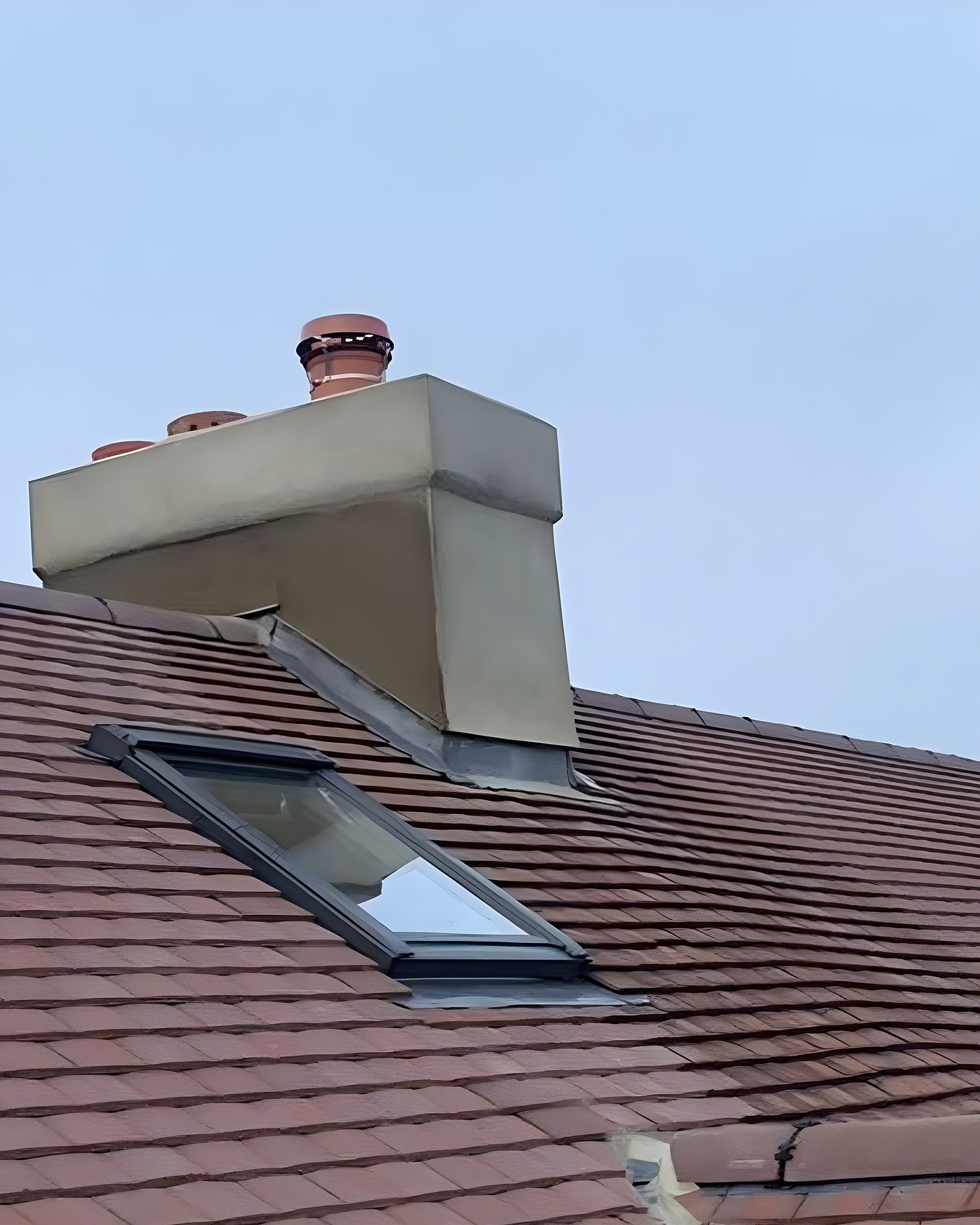
Repointing, flaunching and lead on the stacks of the Victorian streets and the older houses around Ewell.
Chimney Repairs explainedChalk, Clay and Roofs of Every Age.
Epsom is a spring line settlement: the chalk of the North Downs rises to the south and east, and London Clay lies under the centre, north and west of the town. That is a geology lesson with a practical point. Clay ground moves with the seasons, and an old chimney stack or a gable on a house that has moved a little needs its pointing and its lead looked at more often than one on the chalk.
The mix of ages matters too. On the Victorian streets we expect slate, lead and stacks. On the inter-war estates we expect underlay that has perished behind sound-looking tiles, and we lift a few to check before recommending anything. On the Horton estates and the newer streets the roof itself is usually fine and the fault is a detail somebody rushed.
Epsom and Ewell Borough Council is the planning authority. Most roof repairs need nothing from them, and where a house is listed or in a conservation area we check what applies before we price the work.
The fault we are called to most in Epsom, lit on the house.
Where We Work in and Around Epsom.
The three Epsom postcode districts, covered from the Surrey line.
Epsom Town Centre
KT18, KT19The High Street, the station and the Victorian streets around them.
Ewell and Ewell Village
KT17The old village core and the streets around it, part of the borough since 1933.
Stoneleigh
KT17Inter-war suburb on the Worcester Park side.
West Ewell and Ruxley
KT19The 1930s streets between Ewell and Chessington.
Horton and the Former Hospital Sites
KT19The housing built in the early 2000s on the old hospital cluster, beside Horton Country Park.
Woodcote and Langley Vale
KT18The larger houses around Woodcote Park and the village below the racecourse.
Epsom Downs and Tattenham Corner
KT18The chalk downland south of the town and the streets around the two stations.
College and Nonsuch
KT17The eastern side of the town, towards Cheam and Nonsuch Park.
Why Two Jobs in Epsom Cost Different Things.
We give a written price for the work we have looked at. In Epsom these are the things that move it.
The Age of the Roof
A Victorian slate roof near the station, a 1930s tiled roof on Copse Edge Avenue and a 2000s roof at Horton have nothing in common except the rain. We price each for what it is.
The Length of the Eaves
The inter-war streets have long eaves, and the fascia behind the gutter is usually the reason a run has dropped. Replacing both at once is cheaper than replacing them separately.
Stack Work on Clay Ground
Where the ground has moved, a chimney needs its pointing, flaunching and lead done together. Doing one at a time is cheaper today and dearer within a few years.
The Questions We Get Asked in Epsom.
All three postcode districts: KT17, KT18 and KT19. That is the town centre, Ewell, Stoneleigh, West Ewell, Horton, Langley Vale, Woodcote and Epsom Downs. Ring the Surrey line on 01372 632 128.
Not on its own. Plenty of inter-war roofs are sound. The underlay and the nail fixings are what age first, and we can only tell you their state by lifting a few tiles. We do that on the first visit and tell you honestly whether it is a repair or a re-roof.
Yes. On the estates built in the 2000s the roof is usually sound and the fault is a detail: a flashing that was never dressed properly, a blocked outlet, a valley laid short. Quick to find from the roof and usually quick to fix.
Yes. On the long eaves of the 1930s streets the timber behind the gutter is often the reason the gutter has dropped. We replace it with uPVC fascia and vented soffit before hanging the new run.
Yes. Both are on the Surrey line and a short drive from the town centre.
Nothing. We come out, look at the roof and give you a written price, with no obligation to go ahead.
The Other Towns on the Surrey Line.
From the Downs to Ewell, we cover all three Epsom postcodes from the Surrey line, a local 01372 number. The visit and the written price are free.
Tell Us About the Roof in Epsom, and We'll Come and Look.
Your name, a number, the street and what you have noticed. That is all we need.